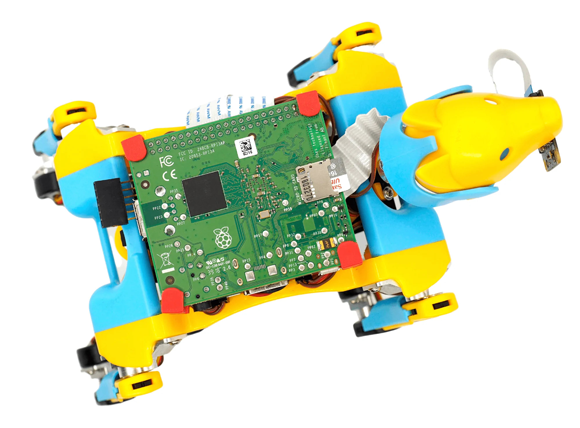
Petoi Smart AI Vision Module
Standalone optical sensor with dedicated neural inference engine. Capable of face detection, AprilTag reading, ball tracking, and customized edge training.
UART/I2CTinyML OnboardArduino / ESP32
Inquire Now How global educational institutes, robotics labs, and OEM developers integrate dedicated hardware-accelerated computer vision into standard Arduino, ESP32, and OpenCat bionic platforms without cloud dependency.
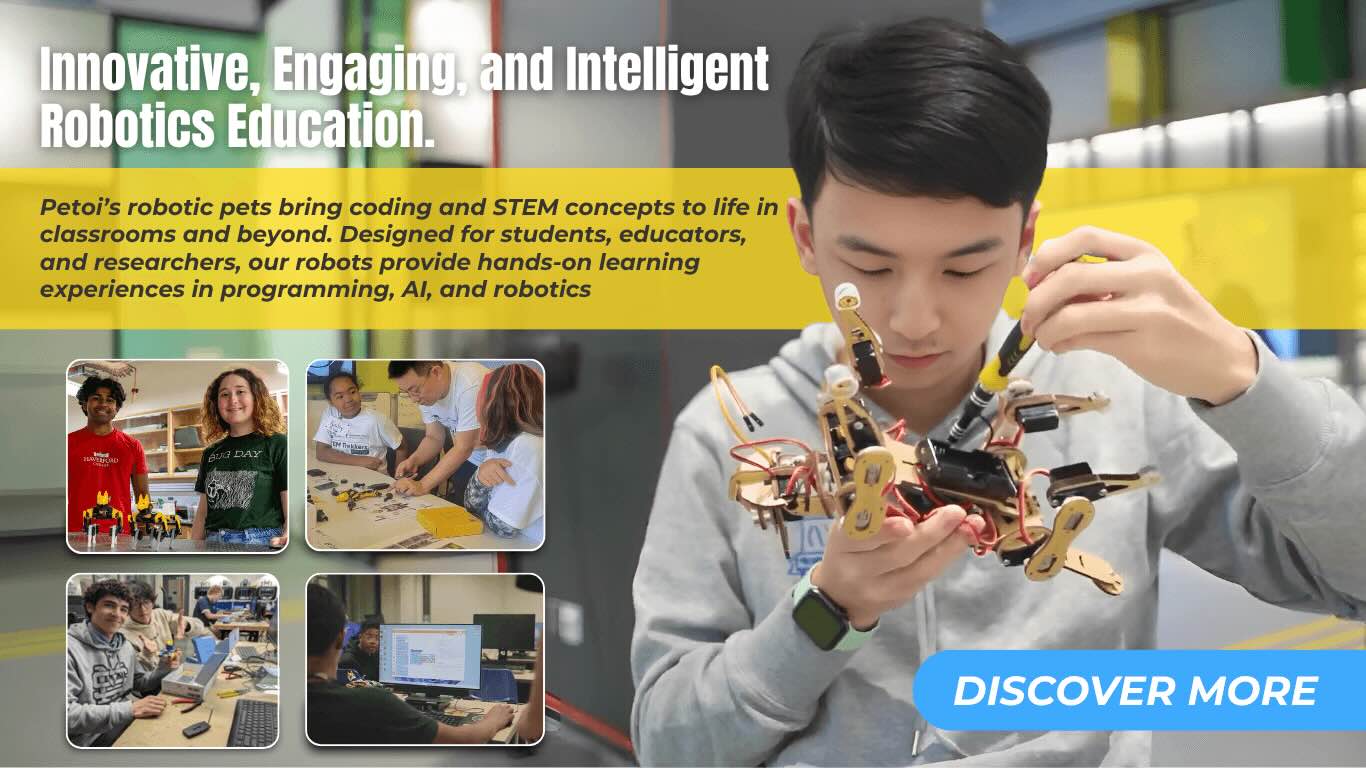
Zero Cloud Overhead. Pure On-Device Intelligence.
Overcome 8-bit and 32-bit microcontroller memory constraints. Execute color detection, AprilTag spatial alignment, face recognition, and real-time obstacle avoidance over lightweight UART/I2C buses.
Engineered for OpenCat, ESP32, and Arduino AVR
Plug-and-play visual telemetry that feeds directly into quadruped inverse kinematics engines without stalling high-frequency servo update loops.
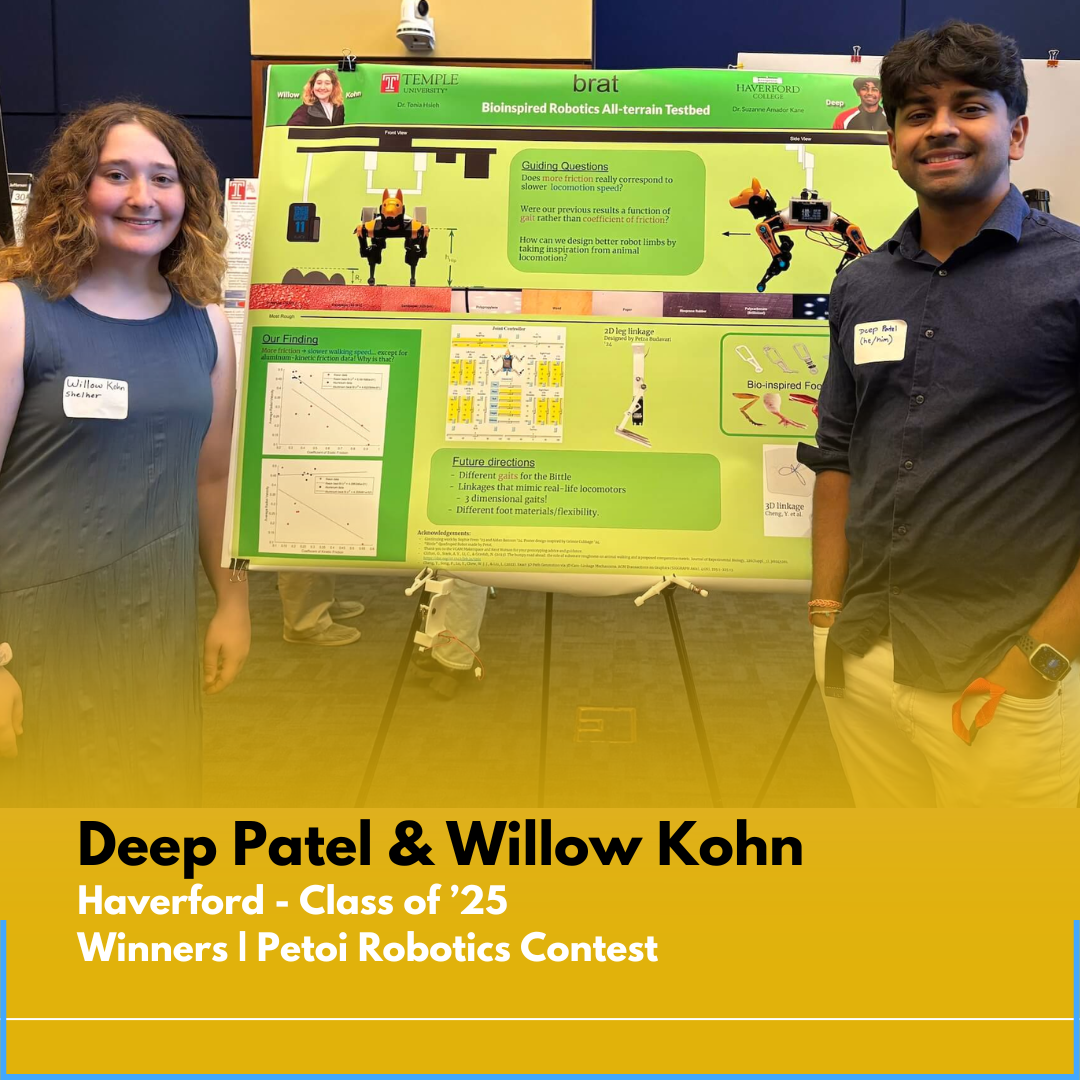
Trusted by Leading Universities, Research Labs & Technology Media








Standard 8-bit AVR microcontrollers like the ATmega328P possess only 2KB of SRAM and 16MHz clock speeds—insufficient to hold a single uncompressed QVGA frame buffer, let alone execute convolution layers. This engineering reality drives global procurement officers and system architects to deploy coprocessor-based AI vision modules. Learn how modern offloaded neural hardware delivers deterministic sensory feedback to Arduino-driven kinematic platforms.
Hardware-Level Neural Pipeline When selecting an AI vision module for Arduino, professional engineers do not attempt to run TensorFlow Lite models directly on the primary host MCU. Instead, an edge AI module integrates an image sensor (such as the OV2640 or GC0328), an onboard dedicated Neural Processing Unit (NPU) or dual-core RISC-V/DSP core, and internal SRAM ranging from 512KB to 8MB.
The module performs image acquisition, RGB conversion, spatial pooling, and model inference autonomously at 30 to 60 FPS. Once inference is complete, the module serializes only the metadata (e.g., target bounding box coordinates $(X, Y, W, H)$, class probability IDs, and vector tracking errors) into lightweight binary or ASCII packets transmitted via standard I2C or UART headers.
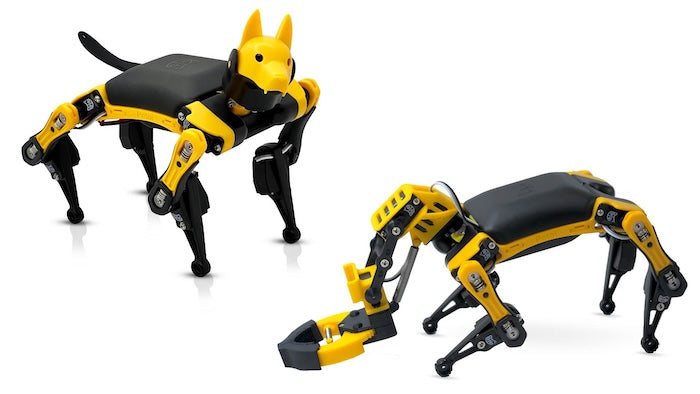
In mobile quadrupedal robotics, passive sensing is insufficient. The visual perception subsystem must act as a sensory loop node for dynamic locomotion. The Petoi Bittle X and Nybble Q platforms, powered by Shenzhen Pbrobot Technology Co., Ltd.’s OpenCat framework, implement real-time visual tracking by coupling an AI vision module directly to servo control algorithms.
As the smart camera detects an authorized human face, a recognized color ball, or an AprilTag marker, it computes displacement vectors relative to the optical lens axis. These coordinates feed into the OpenCat inverse kinematics engine, commanding 9 to 16 pulse-width modulation (PWM) servo joints to re-center the target in real time. This enables biological-grade tracking behaviors such as target pursuit, stair climbing orientation, and automated docking.
Whether you require drop-in vision peripherals for existing classroom Arduino Uno boards or complete bionic quadruped systems pre-calibrated for edge computer vision, we provide verified production units with complete documentation.
Standalone optical sensor with dedicated neural inference engine. Capable of face detection, AprilTag reading, ball tracking, and customized edge training.
High-agility quadruped powered by ESP32 BiBoard with native headers for immediate AI vision module attachment and high-speed gait computations.
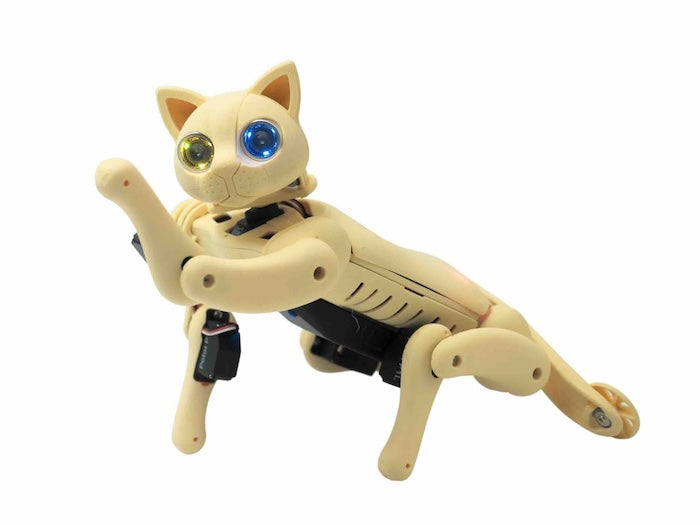
Biomimetic research feline kit designed for high school and university computer vision labs seeking lifelike, flexible leg kinematics and facial tracking.

Ultra-compact benchtop robotics kit engineered for hands-on sensory exploration, machine learning experiments, and multi-robot swarm testing.
For B2B buyers, institutional procurement heads, and chief technology officers, understanding technical trade-offs is essential to eliminate inventory obsolescence and reduce integration costs.
| Evaluation Vector | Hardware-Accelerated AI Vision Module | Standard OV7670 / Raw Sensor FIFO | SBC Host Setup (e.g. Pi 4 + USB Cam) |
|---|---|---|---|
| Microcontroller Compatibility | Universal (Arduino Uno R3/R4, Mega, ESP32, STM32) | Severely restricted (requires external AL422 FIFO or high-pin MCU) | Requires USB/CSI bus host (cannot interface directly to 8-bit MCU) |
| Onboard Inference Execution | Dedicated NPU/DSP runs TinyML models on-sensor at 30–60 FPS | None; transmits raw pixel array requiring host processing | CPU/GPU host processing (high latency jitter under thermal throttle) |
| Host MCU Resource Consumption | <1% RAM footprint (receives small metadata packets via UART/I2C) | Host memory overflow (>90% RAM allocated just to capture lines) | Minimal host MCU load, but heavy OS management and boot overhead |
| Power Consumption | 0.6W – 1.2W (ideal for LiPo / 18650 mobile robotics battery packs) | 0.3W – 0.5W (raw sensor only, excluding compute costs) | 5.0W – 15.0W (requires dedicated buck converter and high-C battery) |
| Deployment Speed | Instantaneous (<100ms boot time, pre-trained neural networks) | High development cost (complex register tuning, slow line readouts) | 25–45 second Linux OS boot sequence before sensor operational |
| Payload & Weight | Compact PCB, 12g to 22g with mounting bracket | Lightweight (8g), but requires auxiliary breakout circuitry | Heavy payload (>120g with heat sink, cabling, and battery expansion) |
Benchmark parameters based on standard 320x240 RGB color classification and face recognition cycles in laboratory conditions by Shenzhen Pbrobot Technology Co., Ltd. engineering department.
The convergence of edge machine learning and low-power silicon is fundamentally altering how educational institutions and robotics manufacturers source vision peripherals. Here is our analysis of the key shifts shaping the global market.
Next-generation Arduino vision peripherals are rapidly shifting toward event-based silicon and ultra-low-power neuromorphic processors. Instead of refreshing entire 640x480 pixel matrices at constant frame rates, sensors transmit only dynamic luminance changes, slashing power draw below 50mW and enabling continuous visual wake-up triggers for battery-powered bionic pets.
Institutes and distributors prioritize modules supporting one-shot or few-shot transfer learning directly on the hardware. Users can teach the camera to recognize novel objects or human gestures with a physical button press or serial command without connecting to cloud platforms, drastically lowering barriers for K-12 and undergraduate robotics classrooms.
Standalone computer vision is increasingly pairing with ambient acoustic voice triggers on single silicon dies. In bionic robotics, combining directional audio localization with edge facial classification allows autonomous dogs like Bittle X to pivot toward acoustic origins before initiating visual tracking, creating lifelike bio-inspired responses.
As global demand for AI-literate workforce education surges, procurement committees in North America, Europe, and East Asia are shifting purchasing budgets away from static mechanical kits toward modular perception upgrades. Modular camera modules with standard 2.54mm breadboard-friendly and Grove-compatible connectors provide the longest inventory shelf life because they bridge legacy 8-bit Arduino classrooms and modern 32-bit RISC-V/ESP32 educational architectures.
By standardizing on standardized serial protocol structures (such as Petoi's OpenCat telemetry commands), educational distributors reduce curriculum rewriting costs while offering schools progressive pathways from graphical Scratch-style blocks to real-world embedded C ++ robotics engineering.
Shenzhen Pbrobot Technology Co., Ltd. combines high-precision manufacturing in Shenzhen’s premier hardware ecosystem with the world’s most recognized open-source quadruped robotics lineage.
Our core platform originates from OpenCat, the most popular and starred open-source quadruped framework worldwide, guaranteeing vast developer community documentation and peer-reviewed firmware reliability.
Eliminate costly enterprise robotics lock-in. Our Arduino and ESP32 vision-integrated robotics platforms provide research-grade kinematics and on-device machine learning at a fraction of industrial quadruped pricing.
We supply modular, standards-aligned courseware spanning Scratch drag-and-drop block coding, Python automation scripts, and advanced C++ kinematics, cutting institutional lesson preparation time by weeks.
From flexible batch prototyping to high-volume classroom rollouts, Shenzhen Pbrobot Technology Co., Ltd. delivers direct international shipping, CE/FCC/RoHS compliance, and dedicated technical backline support.
Need custom lens focal lengths, pre-loaded neural network models, customized pinout headers, or white-label educational packaging? Our engineering team works directly with university departments, STEM networks, and global robotics resellers.
Everything institutional purchasers, laboratory engineers, and educational distributors ask before issuing purchase orders.
An AI vision module for Arduino does not stream raw bitmap or JPEG data into the host MCU's memory. Instead, an integrated edge coprocessor (such as a dual-core RISC-V or Kendryte/Kendryte-class NPU) executes optical frame capturing and neural model processing locally. The module extracts essential object attributes—such as object classification tags, confidence scores, and normalized bounding box centers $(X, Y)$—and transmits this high-density metadata via hardware UART (serial) or I2C registers.
Because these packets require less than 16 bytes of buffer per detection event, an Arduino Uno with only 2KB of SRAM can parse the stream comfortably using standard non-blocking serial libraries while retaining ample CPU cycles for kinematic joint calculation.
Typical edge AI modules draw between 120mA and 280mA at 5.0V DC (approximately 0.6W to 1.4W) under continuous 30 FPS inference. This low thermal and electrical overhead is critical for battery-powered bionic systems such as the Bittle X quadruped. The module runs stably off the host board’s 5V/3.3V regulated power rail without inducing voltage sag across sensitive digital servo lines.
Thermally, the on-module silicon operates well within passive dissipation limits, rarely exceeding 45°C ambient, eliminating the need for active cooling fans that would otherwise add unnecessary weight to lightweight quadruped chassis.
Yes. The hardware supports standard TinyML workflows. Developers can train convolutional neural networks (CNNs) in modern frameworks such as TensorFlow Lite for Microcontrollers (TFLite Micro) or Edge Impulse. Models are quantized from float32 to int8 formats and compiled into micro-binary firmware flashed to the module's onboard SPI flash memory.
Furthermore, many modules support on-device few-shot transfer learning: instructors or students can train new classes (such as custom color tags, room markers, or teacher faces) directly using onboard physical buttons or serial commands in real time without recompiling the underlying host Arduino sketch.
Perception-to-decision latency is typically below 33 milliseconds (operating at 30 FPS continuous inference). When operating over a 115200 or 460800 baud UART serial connection, telemetry packets transfer to the Petoi BiBoard or NyBoard controller in under 1.5ms. The OpenCat motion engine updates servo joint positions within 5ms to 10ms.
This sub-50ms total closed loop latency enables high-agility visual tracking: the robot can pivot, crouch, or step forward smoothly in response to moving targets without the oscillations, overshoot, or sluggish hunting behavior observed in cloud-connected vision systems.
All hardware manufactured by Shenzhen Pbrobot Technology Co., Ltd. complies fully with international import standards, including CE (EMC & Safety), FCC Class B digital apparatus compliance, and RoHS Directive (EU) 2015/863 hazardous substance restrictions. Batch testing records, automated AOI optical inspections, and complete Material Safety Data Sheets (MSDS) for lithium-ion battery configurations are available upon contract finalization.
We maintain active stock for evaluation sample kits and classroom pilot batches (MOQ: 1 unit) dispatched within 48 to 72 hours via international air express (DHL/FedEx/UPS). For institutional bulk procurement (50 to 500+ units), standard factory manufacturing and QA cycle times range between 15 to 25 business days.
Qualified universities, school districts, and commercial robotics distributors can request evaluation evaluation packages and formal quotation matrices by contacting our commercial sales desk at [email protected] or initiating an instant live inquiry below.
Contact the engineering and sales team at Shenzhen Pbrobot Technology Co., Ltd. for volume pricing, technical datasheets, and curriculum integration packages tailored to your institution.
[email protected]