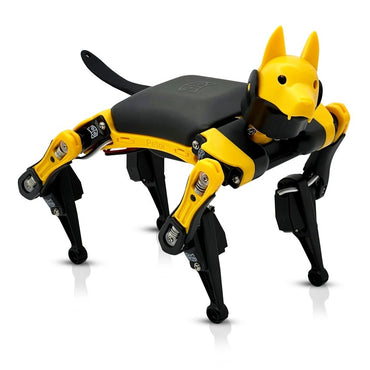
Bittle X Robot Dog
High-torque servos, ESP32 BiBoard, voice control integration, and expandable mounting points.
From $319.00
Get a Quote 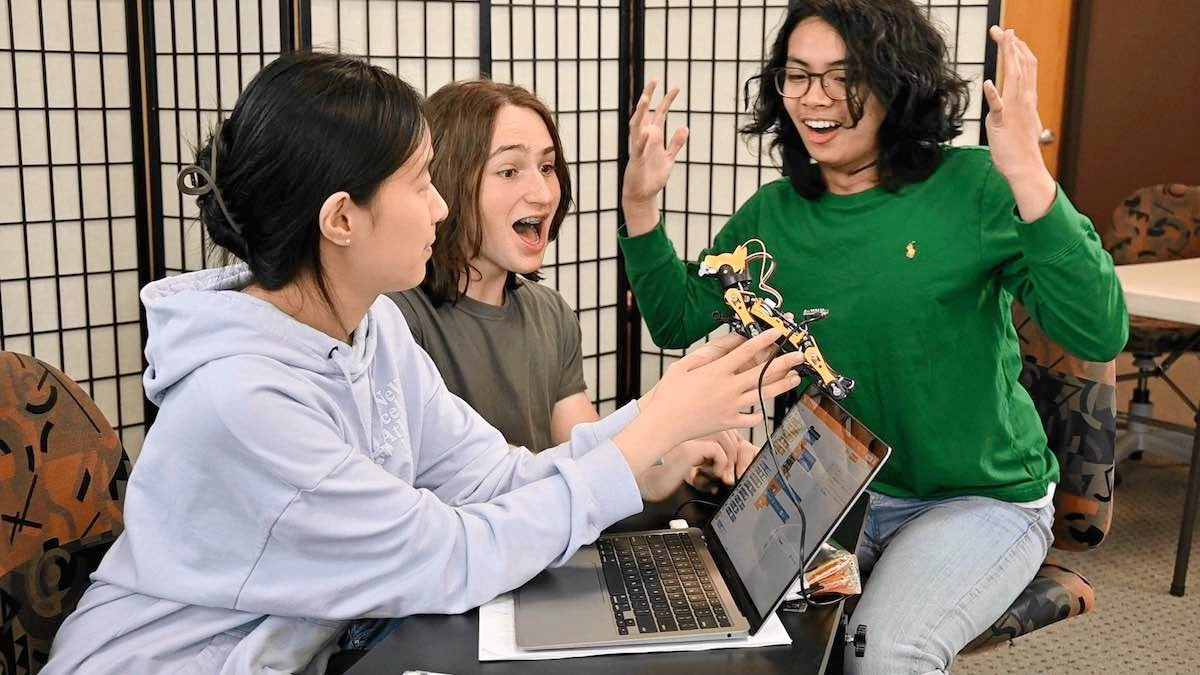
Shenzhen Pbrobot Technology Co., Ltd. provides a zero-barrier, project-based robotics courseware designed around the Scratch-compatible visual programming environment and open-source quadruped robot platforms.
Engineered specifically for schools, makerspaces, and coding academies, our curriculum bridges mechanical assembly, algorithmic thinking, and physical computing. Learners begin by controlling leg joints and progress directly into developing automated behaviors with sensory feedback.
Moving beyond conventional wheeled carts, legged bionic robotics offers an authentic platform for studying real-world bio-mechanics, kinematics, and robotics computing.
Students explore basic concepts of microcontrollers, coordinate systems, and joint actuation without syntax errors. Through snap-together blocks, beginners learn sequencing, loops, conditions, and variable manipulation to dictate movement patterns.
Using the visual Skill Composer module, learners interactively simulate joint angles and export keyframe animations directly into block routines. This teaches spatial reasoning, center of mass, balance restoration, and custom locomotion cycles.
Integrating the standard Grove-compatible sensor pack transforms quadruped robots into responsive edge computing systems. Students program real-time reactive routines based on lighting, motion, obstacles, and touch.
A progressive, classroom-tested framework bridging early computing with robotics engineering.
| Unit / Stage | Core Technical Concepts | Hands-On Classroom Project | Learning Outcomes |
|---|---|---|---|
| Unit 1: Getting Started | Block UI, Robot Calibration, Serial Ports | Connect Bittle, run initial diagnostic gait tests | Master workspace navigation, hardware setup, and basic command flow. |
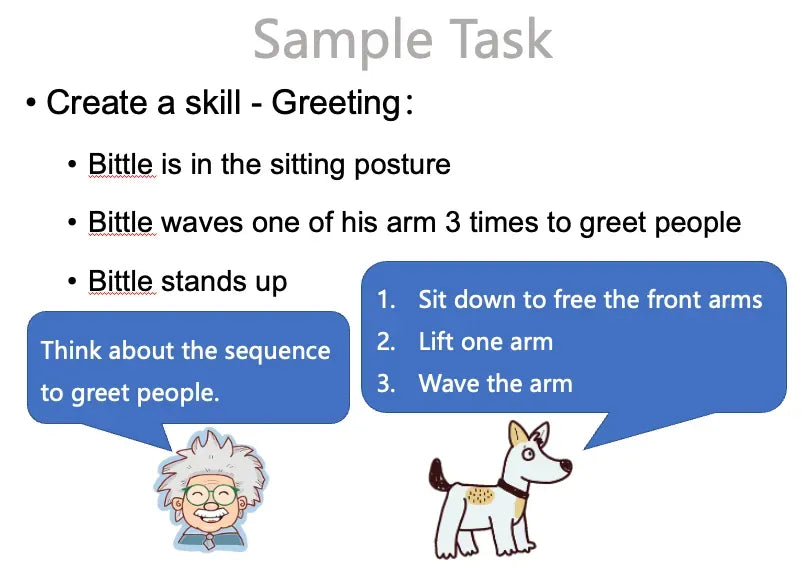
| Unit 2: Kinematic Control | Degrees of Freedom, PWM Servo Angles, Trims | Create customized static poses and greeting actions | Understand multi-axis joint coordination and stability parameters. |
| Unit 3: Motion & Balance | Gait Patterns, Balance Loops, Skill Composer | Choreograph a synchronized multi-robot movement routine | Apply algorithmic sequencing to complex quadruped locomotion. |
| Unit 4: Sensor Integration | Analog/Digital Input, Thresholds, Events | Autonomous sentry patrol with ultrasonic & PIR triggers | Develop closed-loop decision making responding to real physical input. |
| Unit 5: Capstone Challenge | Conditional Logic, State Machines, IoT Problem Solving | Search-and-rescue obstacle course navigation | Synthesize programming, mechanical balance, and sensory robotics logic. |
Step-by-step visual tutorials accompany each chapter to support teachers and expedite student mastery.
Equip your school lab or robotics academy with robust, open-source quadruped hardware and modular sensor kits.
High-torque servos, ESP32 BiBoard, voice control integration, and expandable mounting points.
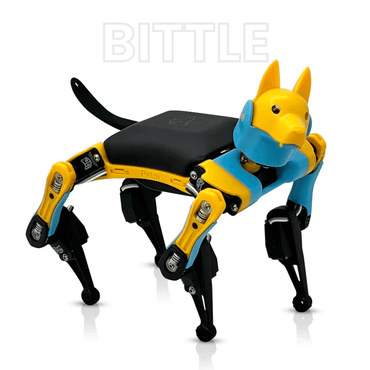
Arduino-compatible NyBoard controller, open-source firmware, and agile bionic movements.
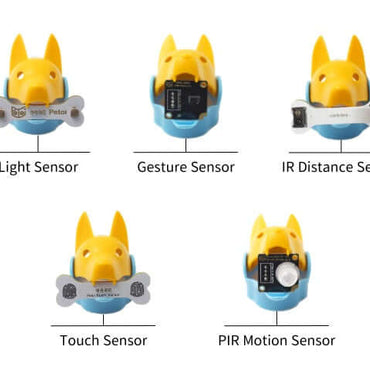
Includes light, touch, gesture, PIR motion, and infrared distance modules with standard headers.
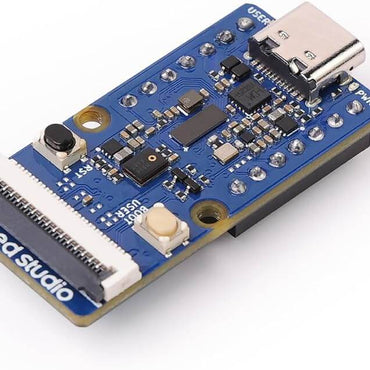
Real-time visual tracking, facial recognition, and object classifier for intelligent robotics lessons.