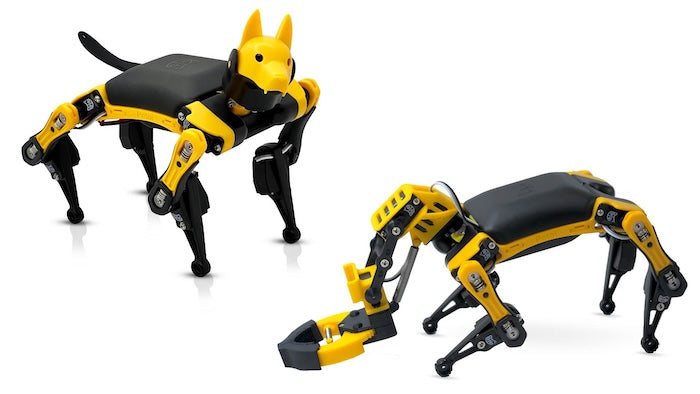
Bittle X Robot Dog
Our premier voice-controlled robot dog featuring offline edge-AI speech recognition, 9 to 10 DOF, and robotic arm integration.
ESP32 BiBoard35+ Voice CommandsRobotic Arm Option
Get Catalog 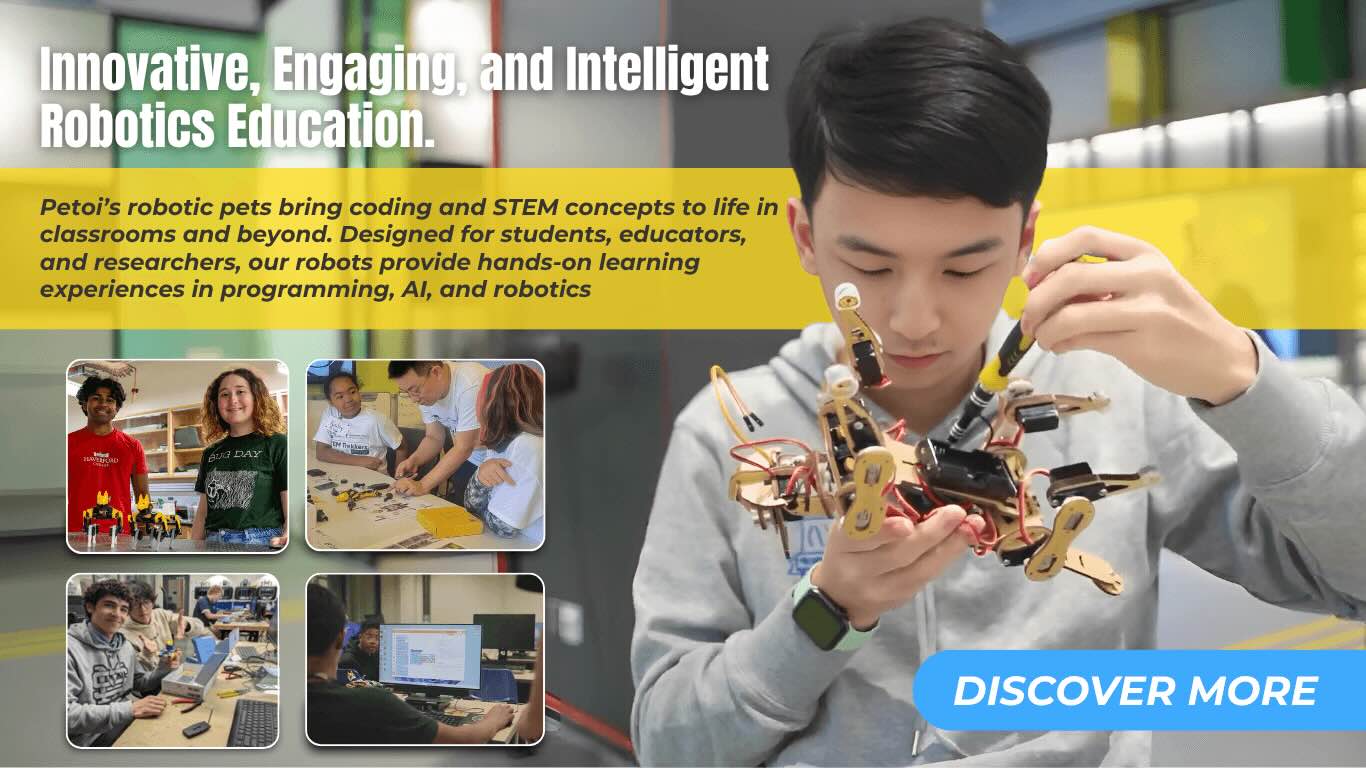
How global academic institutions, robotics labs, and distributor networks leverage palm-sized bionic quadrupeds with low-latency edge speech recognition.
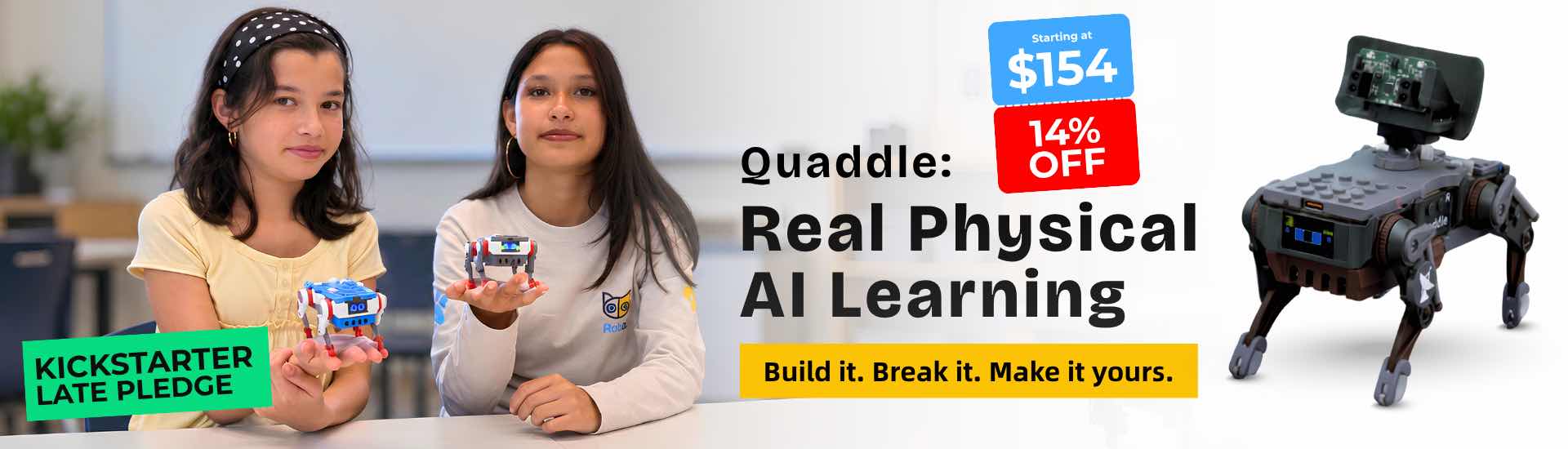
Industrial Reliability in a Palm-Sized Form Factor
Engineered with high-torque coreless servos, shock-absorbing spring joints, and multi-tier programming from Scratch to ROS 2.
Powered by OpenCat. Built for Edge AI.
Native ESP32 BiBoard architecture supporting local neural audio decoding, AI vision fusion, and Raspberry Pi co-processing.
Validated by leading robotics researchers, global universities & media authorities














Engineered by Shenzhen Pbrobot Technology Co., Ltd. for seamless deployment across primary classrooms, higher education labs, and industrial automation prototypes.
Our premier voice-controlled robot dog featuring offline edge-AI speech recognition, 9 to 10 DOF, and robotic arm integration.
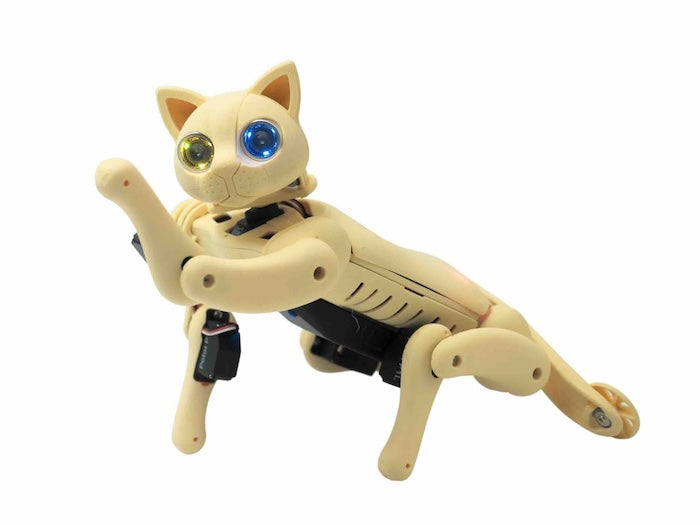
The companion bionic quadruped cat platform engineered with lifelike feline gaits, ESP32 controller, and vision sensor slots.
The historic Arduino-compatible benchmark for foundational embedded development, mechanical assembly, and C++ pedagogy.
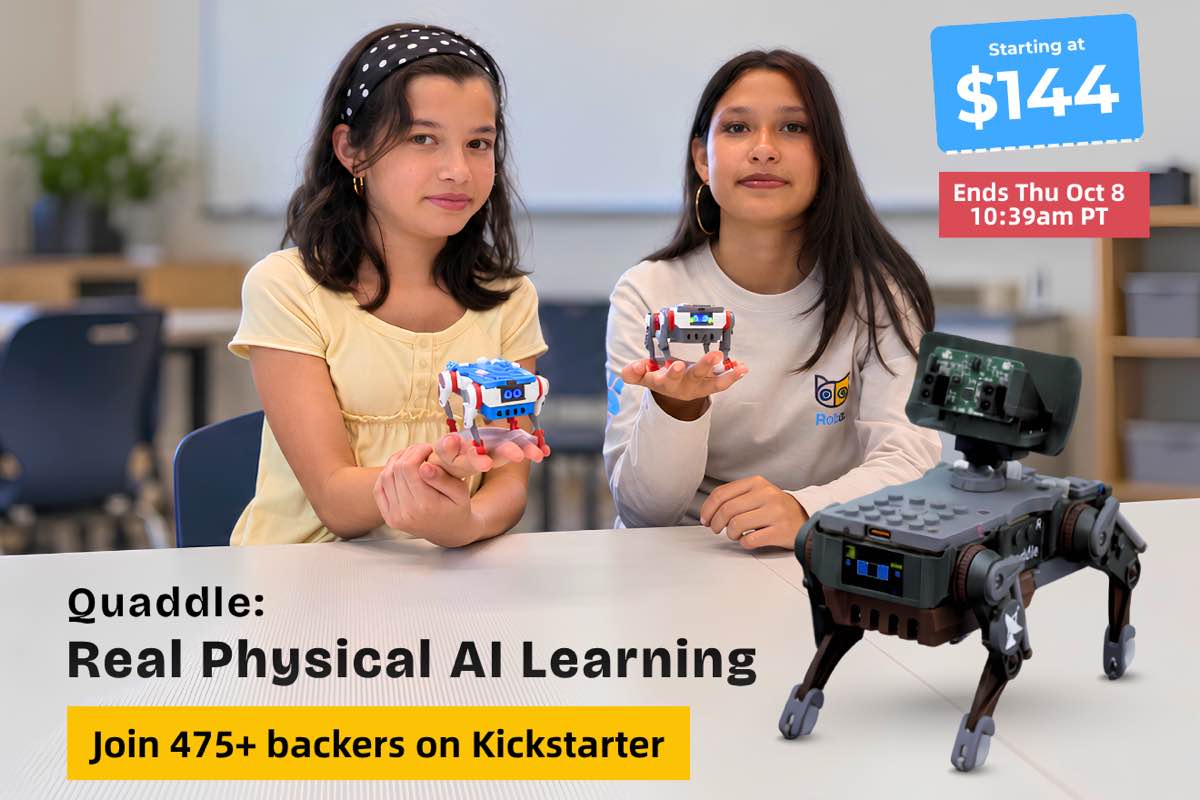
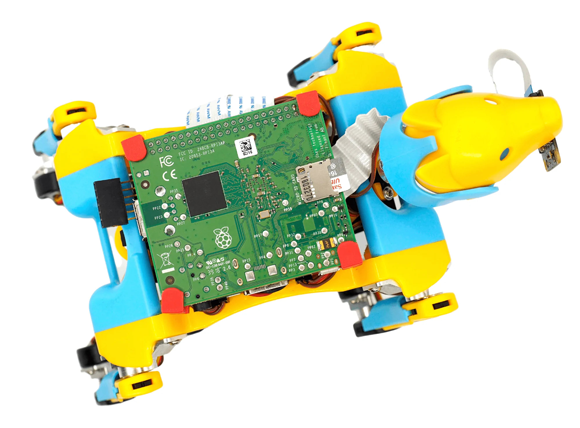
Ultra-compact desktop quadruped kit designed for high-density computer science labs and lightweight mechatronic experiments.
Institutional buyers frequently inquire about latency, network dependencies, and servo wear. Here is how our dual-tier embedded architecture solves the fundamental challenges of voice-driven biomimetic robotics.
Deterministic Edge Inference Conventional consumer toys route spoken audio over Wi-Fi to third-party cloud servers, introducing 800ms–2000ms latency, privacy liabilities, and classroom network dropouts. Bittle X completely rewrites this paradigm.
Engineered by Shenzhen Pbrobot Technology Co., Ltd., our voice-controlled robot dog integrates an onboard acoustic neural network processor directly on the BiBoard controller. Acoustic energy captured by the far-field microphone is decoded into phoneme tokens in real time:
 Biomimetic Inverse Kinematics
Bipedal and quadrupedal dynamics present steep engineering hurdles. Without coordinated gait interpolation, voice commands result in jerky movements and premature motor failure.
Our proprietary OpenCat motion engine continuously processes 6-axis IMU telemetry to calculate balance corrections across all 9 degrees of freedom. Whether executing an aggressive trot, crouching, or waving a paw, the system calculates multi-axis interpolation in real-time:
As AI language models and human-robot interaction (HRI) transform educational benchmarks, global procurement directors must evaluate the market shifts defining the next 3 to 5 years.
Educational robotics has reached saturation with wheeled rovers that fail to challenge students conceptually. Procurement trends demonstrate an 84% surge in budgetary allocation toward bio-inspired legged platforms. A voice-controlled robot dog teaches complex kinematics, center-of-mass physics, and natural gait synthesis that flat-wheeled chassis cannot provide.
Governments, school districts, and university procurement bodies across North America, the EU, and East Asia are systematically rejecting internet-tethered educational hardware. Procurement guidelines now explicitly mandate offline neural processing to mitigate biometric eavesdropping liabilities and prevent campus bandwidth congestion.
Industrial-scale quadruped platforms (like Spot or Unitree) cost thousands of dollars per unit, making 1-to-1 or paired classroom learning economically unviable. Procurement officers are choosing palm-sized, modular robot dogs that lower the Total Cost of Ownership (TCO) by 90% while offering replaceable injection-molded components and standardized snap-in servo horns.
Voice is no longer an isolated control channel. The future lies in multi-modal Human-Robot Interaction. Sourcing demands require controllers capable of simultaneous acoustic inference and computer vision processing, where vocal prompts like "Follow me" initiate facial tracking, object classification, and proportional distance navigation.
Institutions refuse single-purpose kits. Sourcing criteria now demand continuous pedagogical scalability: younger students control voice gaits via block coding (Scratch/Mind+), secondary schools dive into embedded C++, and graduate researchers execute Python APIs, ROS 2 nodes, and reinforcement learning pipelines on the same physical asset.
Distributors and academic consortia require guaranteed 36-month component lifecycles, drop-in replacement servos, and verified lithium battery shipping compliance (UN38.3). Shenzhen Pbrobot Technology Co., Ltd. provides robust lifecycle warranties and dedicated spare parts depots globally.
Direct architectural benchmark for institutional procurement teams evaluating Bittle X against complementary platforms.
| Evaluation Metric | Bittle X (Flagship Voice) | Nybble Q (Bionic Cat) | Bittle Classic | Quaddle Desktop Kit |
|---|---|---|---|---|
| Voice Processing Engine | Onboard Offline Edge AI (35+ factory commands, zero cloud latency) | Acoustic Expansion Module compatible | Requires External Voice Shield / SBC | Serial Command Control via Host |
| Main Controller Microchip | ESP32 Dual-Core Tensilica LX6 (240MHz, 520KB SRAM) BiBoard | ESP32 Dual-Core BiBoard | NyBoard (ATmega328P @ 16MHz) | ESP32 / OpenCat Compatible Core |
| Kinematic Degrees of Freedom | 9 to 10 DOF (8 leg joints, 1 neck joint, +1 optional gripper arm) | 11 DOF (8 leg joints, 2 neck joints, 1 tail) | 9 DOF (8 leg joints, 1 neck joint) | 8 DOF (Articulated 2-joint limbs) |
| Servo Geartrain & Specs | High-Torque Digital Metal-Gear Coreless Servos (Stall Protected) | Custom High-Speed Digital Servos | High-Speed Plastic/Alloy Servos | Micro High-Precision Digital Servos |
| Payload & Mechanical Expandability | Up to 300g payload (Mounts Raspberry Pi Zero/3A+, Robotic Arm, Camera) | Up to 200g payload (Vision sensor, ultrasonic) | Up to 150g payload (Sensor shields) | Desktop-rated sensor modules |
| I/O Interfaces & Bus Support | UART, I2C, SPI, 4x Grove Headers, USB-C, BLE 4.2 & Wi-Fi | UART, I2C, Grove Headers, BLE, Wi-Fi | UART, I2C, USB Serial Dongle | UART Serial, USB-C, Wi-Fi |
| Software & Programming Stacks | Scratch / Mind+, Arduino C++, Python, Petoi Desktop App, ROS 2 Bridge | Scratch, Arduino C++, Python | Scratch, Arduino C++ | Block Coding, C++, Python |
| Battery Autonomy & Safety | 7.4V 1000mAh Li-ion Battery with BMS; 60–90 min active walk/listen | 7.4V 1000mAh Li-ion Battery with BMS | 7.4V Li-ion Battery with BMS | Integrated USB-C Rechargeable Pack |
| Recommended Sourcing Application | K-16 STEM, University AI Labs, HRI Research, Reseller Channel | High School STEM, Creative Coding, Makers | Foundational Mechatronics & Arduino | Entry Makerspaces & Coding Camps |
Detailed specification sheets, STEP CAD 3D files, and bulk education pricing agreements are available upon catalog request.
We combine cutting-edge open-source innovation with tier-one consumer electronics manufacturing infrastructure in Shenzhen.
Our quadruped control kernel originates from the most-starred quadruped robotics framework in GitHub history, backed by an active global community of over 50,000 engineers and researchers.
Operating from Shenzhen, our production lines maintain ISO-grade surface mount assembly (SMT), precision mold tooling, high-impact ABS injection molding, and 100% burn-in servo testing.
Eliminate teacher friction with structured, standards-aligned courseware (CSTA, NGSS) covering Scratch block coding, C++ kinematics, and computer vision with hands-on lesson slides.
Certified CE, FCC, RoHS, and REACH. Battery systems are verified with UN38.3 documentation, MSDS, and drop-tested hazardous goods transport compliance for immediate customs clearance.
Watch how our voice-controlled quadruped turns complex robotics programming into an intuitive, physical reality inside modern classrooms.
"The organic nature of robots with legs is much more engaging than wheels. When students speak to Bittle and see it react, mechatronics becomes tangible." — University of Colorado Boulder STEM Camp
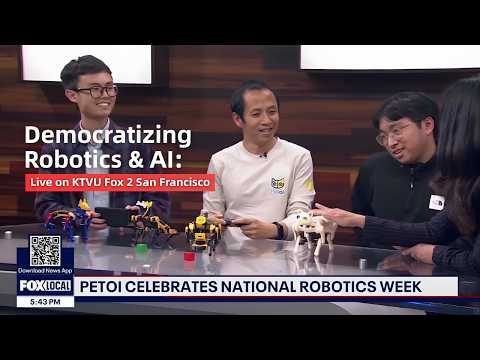
How institutions worldwide deploy Bittle X and the OpenCat architecture across diverse pedagogical tiers.
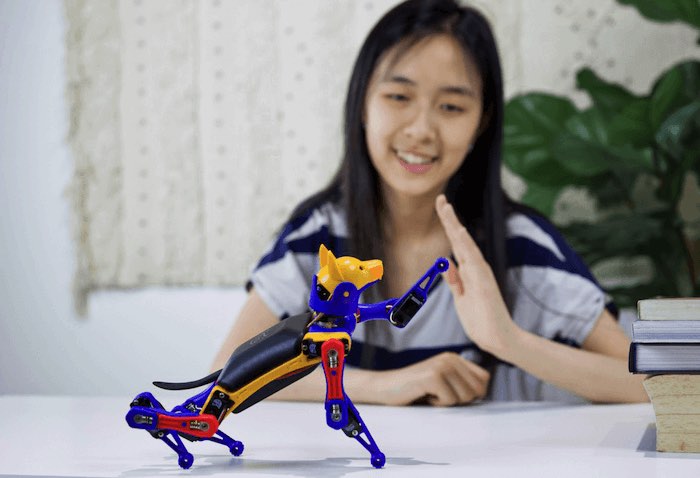 Elementary & Middle STEM
For younger learners (Grades 3–8), tactile feedback and instantaneous responsiveness are vital to prevent disengagement.
With Bittle X, students begin interacting immediately using natural vocal prompts. Using Petoi Coding Blocks (based on Scratch 3.0), students quickly progress to writing conditional logic: "If voice command heard = 'Roll over', execute gait sequence #14 and illuminate RGB LEDs". This bridges the gap between abstract algorithmic thinking and tangible mechatronic action.
Undergraduate and graduate mechatronics courses require open hardware platforms capable of hosting custom mathematical models.
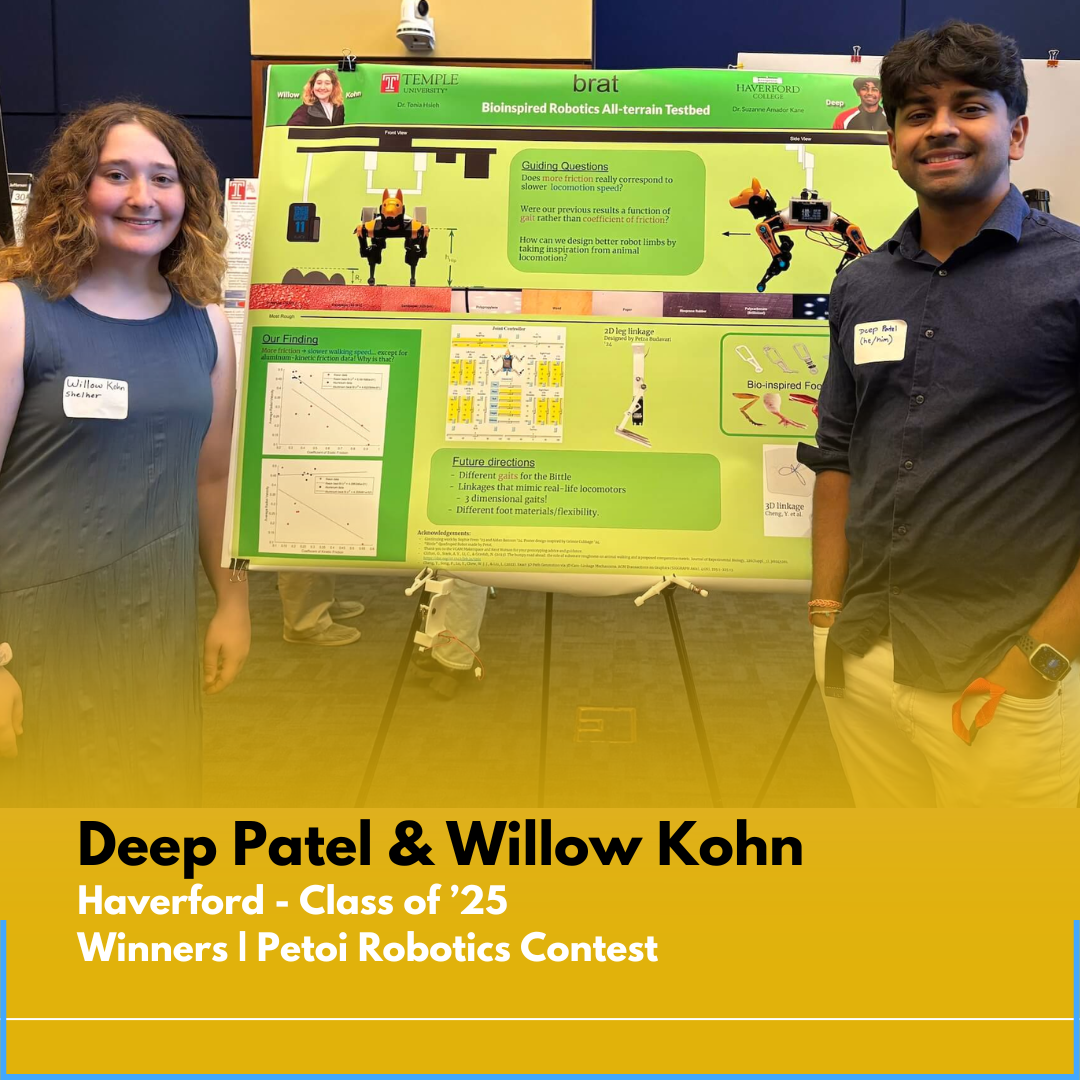
Because Shenzhen Pbrobot Technology Co., Ltd. provides full C++ source access and open serial protocol documentation, researchers use Bittle X as an economical testbed for quadrupedal locomotion research. Students implement customized trajectory generators, integrate inverse kinematics formulas directly in the ESP32 firmware, or offload neural network inferencing to a top-mounted Raspberry Pi running OpenCV and ROS.
Shenzhen Pbrobot Technology Co., Ltd. delivers the gold standard in accessible bionic robotics, powering university research teams, high school hackathons, and commercial distributors.
Authentic feedback from laboratory directors, STEM instructors, and academic camp leaders.
In-depth, verified answers addressing the technical, privacy, and commercial questions institutions ask most frequently.
The Bittle X voice-controlled robot dog operates on an embedded edge-AI acoustic inference model directly on its hardware controller. Incoming analog audio from the MEMS microphone is converted into high-fidelity digital audio, processed through onboard digital filtering to attenuate ambient background noise, and evaluated against quantized acoustic acoustic models stored in local non-volatile flash memory.
Because the acoustic classification occurs entirely on the local microcontroller, latency is bounded under 200 milliseconds—yielding immediate kinematic response. More importantly, this architecture eliminates data exfiltration risks: voice data is never digitized for cloud storage, ensuring absolute compliance with international student privacy frameworks including COPPA (Children's Online Privacy Protection Act) and EU GDPR.
Yes. Bittle X comes standard with over 35 pre-trained acoustic commands covering posture ("Sit", "Lie down"), directional locomotion ("Walk forward", "Turn left", "Back up"), and dynamic skills ("Say hello", "Do pushups", "Play dead"). However, our OpenCat firmware enables full vocabulary expansion.
Educators and developers can map custom trigger phrases by integrating external voice recognition engines, re-flashing speech recognition lookup tables through Arduino IDE or ESP-IDF, or linking custom UART serial string triggers to newly choreographed joint keyframes created inside Petoi Skill Composer.
Bittle X provides open, hardware-level connectivity. The onboard BiBoard provides exposed hardware UART serial pins, I2C bus headers, SPI lines, and analog/digital Grove sensor ports. Standard wireless communication includes Bluetooth Dual Mode (Classic and BLE 4.2) as well as 2.4GHz Wi-Fi (802.11 b/g/n).
For high-level computational autonomy, developers can mount compact single-board computers such as the Raspberry Pi Zero 2W or Raspberry Pi 3A+ directly atop the chassis, establishing a hardware UART serial bridge running at 115200 baud. For heavier edge computing payloads such as NVIDIA Jetson Orin Nano, the robot dog communicates seamlessly via wireless Wi-Fi UDP/TCP sockets or direct USB serial dongles, enabling full integration with ROS 2 (Robot Operating System) navigation nodes and custom PyTorch visual inference models.
Educational robotics kits frequently suffer high failure rates due to stripped gear teeth and brittle structural plastics. Shenzhen Pbrobot Technology Co., Ltd. addresses these pain points with two proprietary engineering innovations:
First, all articulated limbs utilize custom-engineered digital coreless servos equipped with reinforced metal-hybrid geartrains and built-in stall protection. If a student forcibly restricts a joint or the robot dog hits a rigid barrier, current limiting routines prevent thermal coil burnout. Second, the leg linkages feature patented shock-absorbing spring joints that flex mechanically under impact forces, preventing kinetic shock from transferring to the servo drive shafts during dynamic jumps and drops.
As an experienced global OEM/ODM manufacturer, Shenzhen Pbrobot Technology Co., Ltd. ensures full regulatory compliance across international markets. Our products hold authentic CE, FCC, RoHS, and REACH certifications. The custom rechargeable 7.4V lithium-ion battery packs incorporate dedicated onboard Battery Management Systems (BMS) with overcharge, overdischarge, short-circuit, and thermal runaway protection.
For seamless international customs clearance and air/sea freight, we provide certified UN38.3 test summaries, Material Safety Data Sheets (MSDS), and 1.2-meter drop test packaging verification reports, completely eliminating logistics delays for overseas procurement tenders.
We provide comprehensive B2B support programs designed for scale: institutional quantity tiers with tiered volume discounts, fully customizable pre-assembled or DIY unassembled kits, customized packaging for regional resellers, dedicated spare-parts replenishment pools, and bilingual engineering support direct from our Shenzhen headquarters.
In addition, institutional partners receive our complete library of free educational courseware, instructor presentation slide decks, and project-based STEM rubrics. To initiate an evaluation sample or request volume pricing, procurement officers can click the catalog button or email our team at [email protected].
Connect with our technical engineering and procurement division at Shenzhen Pbrobot Technology Co., Ltd. We provide sample units, volume discounts, and comprehensive curriculum integration guides.
[email protected]