Featured Bionic Platforms & Embedded Hardware Lineup
Browse our globally exported, CE-compliant bionic mechanical platforms, robotics peripherals, and intelligent machine pets engineered for seamless Linux single-board computer integration.
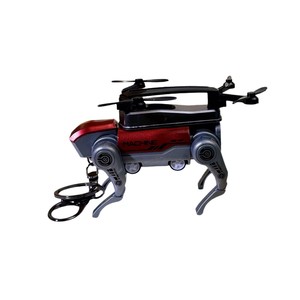
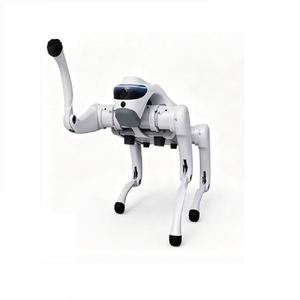
Engineering Excellence & Turnkey Supply Chain Infrastructure
Originating from precision robotics manufacturing hubs, our factory delivers verified mechanical reliability, CE-compliant electromagnetic shielding, and deeply documented SDK integrations.
Rigorous CE & RoHS Compliance
Our quadruped hardware undergoes comprehensive laboratory testing for the EU market. We meet all stringent requirements for Electromagnetic Compatibility (EMC Directive 2014/30/EU), ensuring that continuous bus servo switching does not produce inductive back-EMF noise or high-frequency interference across co-mounted Raspberry Pi, Jetson Nano, or sensor buses.
Hybrid Embedded Architecture
Deploy a dual-tier processing ecosystem. Sub-millisecond forward and inverse kinematics, high-speed 16-channel PWM pulse generation, and IMU pose recovery are delegated to an onboard real-time ESP32/NyBoard microcontroller. Meanwhile, compute-heavy tasks like OpenCV edge vision, ROS2 nodes, and SLAM navigation run natively on the mounted Raspberry Pi via high-baud UART.
Scalable Industrial OEM/ODM
From injection-molded shock-absorbent polyoxymethylene (POM) skeletons to metal-gear coreless digital servos, our facilities handle custom structural adaptations, custom PCB routing for custom HAT modules, custom branded packaging, and volume-discount supply contracts for commercial buyers and educational distributors.
Technical Architecture: Petoi Bittle Kinematics on Raspberry Pi
A white-paper overview of hardware-software orchestration, serial packet framing, and gait coordination.
Integrating a single-board computer (such as a Raspberry Pi 4B, 3A+, or Raspberry Pi Zero 2W) with the Petoi Bittle hardware framework unlocks edge intelligence that microcontroller-only systems cannot achieve. In this architecture, the CE-certified Petoi bionic frame provides a compact 9-DOF or 12-DOF morphology, managed by specialized low-level locomotion software derived from the open-source OpenCat framework.
The operational protocol relies on an asymmetrical division of compute resources:
- High-Level Master (Raspberry Pi Linux OS): Executes spatial machine learning, edge camera object classification (YOLOv8-tiny), audio speech synthesis via natural language models, and cloud IoT telemetry. Commands are parsed and formatted into byte-level serial payloads (e.g., token-based ASCII or binary packets like
['k', 'walkF', '\n']). - Low-Level Controller (BiBoard / NyBoard): Handles interrupt-driven timing pulses, reading the onboard 6-axis MPU6050/ICM-42670 IMU to continuously compensate for center-of-mass perturbations. If an external impact pushes the quadruped off balance, the controller injects corrective trigonometric offsets into individual leg angles without waiting for single-board compute roundtrips.
- Serial Bus Safety Isolation: The system features hardware-level optical isolation and common-ground decoupling to shield the sensitive Raspberry Pi 3.3V logic pins from voltage spikes produced by high-torque digital servos during unexpected stalls.
Global Procurement Trends in Educational & Bionic Robotics
Key industry shifts that procurement officers, universities, and commercial enterprise buyers must navigate over the 2025–2030 sourcing horizon.
1. Transition from Wheeled to Biomimetic Quadruped Platforms
Institutional robotics curricula and research facilities are actively retiring conventional two-wheel differential drive platforms in favor of dynamic legged robots. Legged kinematics force students and researchers to work directly with coordinate frames, center-of-mass mechanics, ground reaction forces (GRF), and terrain-adaptive gaits. This hands-on complexity delivers superior educational value across secondary and tertiary STEM environments.
2. Standardization on Linux ROS2 Middleware
Procurement teams are prioritizing hardware architectures that natively support the Robot Operating System (ROS2). Bionic dogs that link to Raspberry Pi or Jetson platforms via predictable Python bindings allow research teams to deploy universal nodes for micro-SLAM navigation, spatial odometry, and path planning without redesigning core mechanical systems from scratch.
3. Supply Chain Demand for Verifiable CE & EMC Validation
Regulatory scrutiny across the European Economic Area, North America, and Australia has intensified. Institutional purchasers increasingly reject generic electronic kits that lack authenticated CE, FCC, and RoHS declarations. Certification that verifies safe lithium-ion battery management, thermal mitigation under continuous servo stall, and low RF harmonic emissions is now an essential prerequisite for volume purchases.
Future Technological Development Trends for Edge Bionics
How next-generation motor control, on-device neural inferencing, and open topologies will shape miniature legged machines.
Reinforcement Learning Sim-to-Real Deployment
Future iterations of the Petoi Bittle architecture are shifting from pre-baked parametric gaits toward policies trained directly in physics simulators (such as Isaac Gym or PyBullet). Using lightweight neural networks running on edge Raspberry Pi boards, robots dynamically adjust their stride, foot clearance, and recovery timing when walking across gravel, ice, or uneven surfaces.
Field-Oriented Control (FOC) Brushless Actuation
While coreless PWM servos provide exceptional torque-to-weight metrics for cost-sensitive educational use, next-generation industrial micro-quadrupeds are shifting toward miniature planetary-geared BLDC motors with high-resolution magnetic encoders. This architectural leap enables active compliance, allowing the robot to measure joint torques, absorb heavy impacts, and spring forward dynamically.
Multi-Modal Vision-Language-Action (VLA) Models
As miniature single-board computers integrate dedicated Neural Processing Units (NPUs), quadruped robots will run local, quantized VLA models. Rather than relying on simple ultrasonic distance sensors, bionic units will interpret spatial contextual cues via depth cameras, follow visual semantic landmarks, and execute complex real-time physical workflows via multimodal commands.
Enterprise Sourcing Advantages & Factory Production Guarantees
Comprehensive support for international educators, researchers, and commercial distributors.
Zero Vendor Lock-In
All hardware builds directly on the OpenCat open-source software stack. You retain full control over the C++ low-level code, Python serial drivers, and high-level ROS nodes. No proprietary cloud subscriptions or forced walled gardens.
Tested Educational Curricula
We provide comprehensive bilingual lesson modules ranging from block-based drag-and-drop programming for K-12 classrooms to embedded C++ and Python robotics coursework tailored for university engineering departments.
Extensible Mechanical Payload
The structural chassis includes standardized 2.54mm pin header breakouts, threaded M2/M3 mount points, and balance-tested payload zones designed specifically for Raspberry Pi, LiDAR units, and articulating robotic arms.
Volume Supply & Global Logistics
We maintain steady reserves of microcontrollers, high-density batteries, and gear-reinforced servos. Our logistics infrastructure manages secure, worldwide air and ocean freight, backed by standardized 30-day warranty policies.
Frequently Asked Questions for B2B & Educational Procurement
Detailed technical and purchasing information addressing single-board integrations, compliance standards, and custom factory configurations.
The Raspberry Pi mounts directly to the upper chassis screw tabs on Petoi Bittle. Communication is established via the 40-pin GPIO header using UART serial pins (TX/RX) wired directly into the NyBoard or BiBoard controller. Power can be routed through an isolated step-down buck converter from the internal dual-cell Li-ion battery pack, or via an auxiliary 5V/3A battery pack to isolate computing power from motor current draws.
Our manufacturing processes comply fully with the European Union Electromagnetic Compatibility (EMC) Directive 2014/30/EU, the Low Voltage Directive (LVD) 2014/35/EU, and the RoHS Directive 2011/65/EU (and its amendment 2015/863). The lithium-ion battery packs include certified Battery Management Systems (BMS) with overcurrent, overvoltage, and thermal cutoffs, compliant with UN38.3, MSDS, and EN 62133 air-freight transport standards.
Yes. Using an onboard Raspberry Pi 4B (4GB or 8GB), developers can install Ubuntu Server or Desktop alongside ROS2 (Humble or Iron). By bridging the open-source Petoi Python SDK via standard serial nodes, ROS topics can subscribe to joy/cmd_vel inputs and publish joint states, IMU data, and video streams from an onboard wide-angle camera or micro-LiDAR module.
For off-the-shelf, CE-certified educational sets, our minimum order quantity starts at 10 units for schools, labs, and educational institutions. For custom white-label packaging, custom injection-molded colors, or modified mainboards, the typical MOQ is 500 units, with initial pilot prototype runs completed in 3 to 4 weeks and volume production batches fulfilled within 30 to 45 business days.
Our high-torque digital bus servos feature wear-resistant metal gears, coreless motors, and current-limiting feedback routines within the low-level firmware. If a student uploads an uncalibrated gait that forces a joint into physical obstruction, the internal control software senses the thermal draw and steps down the PWM duty cycle to protect the motor windings from overheating.
Request an Enterprise Quote or Educator Kit Proposal
Connect directly with our engineering sales team to receive volume tier pricing, hardware datasheets, and custom integration roadmaps for your institution or supply pipeline.