Featured Commercial Bionic Pets & Programmable Robotics Line
Explore our specialized bionic companion and programmable robotics hardware catalog engineered under strict CE RED, EMC, and RoHS safety compliance protocols for worldwide distribution.
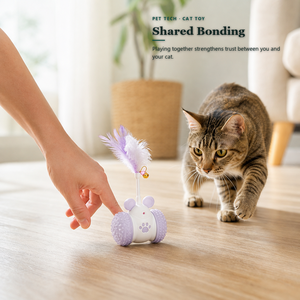
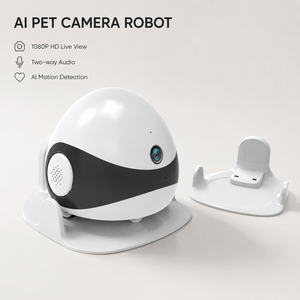
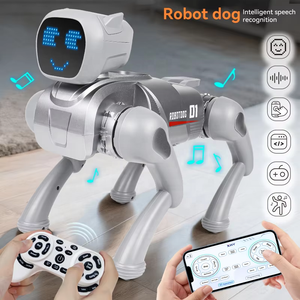
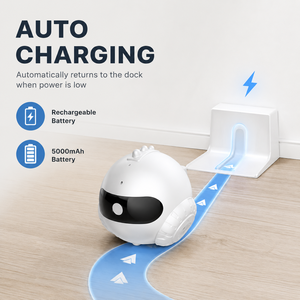
Engineering CE-Compliant Bionic Quadrupeds: The Petoi Bittle Framework
In the rapidly scaling sector of intelligent bionic robotics and companion devices, European Union import conformity demands more than superficial testing. Sourcing an authentic CE-certified Petoi Bittle robot pet requires an integrated understanding of electromagnetic compatibility (EMC Directive 2014/30/EU), the Radio Equipment Directive (RED 2014/53/EU), the Low Voltage Directive (LVD 2014/35/EU), and strict hazardous material thresholds mandated by RoHS 3 (Directive 2011/65/EU and amendment 2015/863).
Unlike rudimentary motorized toys that employ brittle toy-grade geared gearboxes, Petoi Bittle platform models manufactured at our audited Shenzhen facility are bionic articulated quadrupeds engineered with precision metal-gear digital servos, high-current bus architectures, and custom dual-core ESP32 or NyBoard ATmega328P computing units. Gait balance algorithms dynamically reconcile inertial measurement unit (IMU) readings at frequencies upwards of 200 Hz, ensuring self-righting kinematics that mimic mammalian musculoskeletal mechanics.
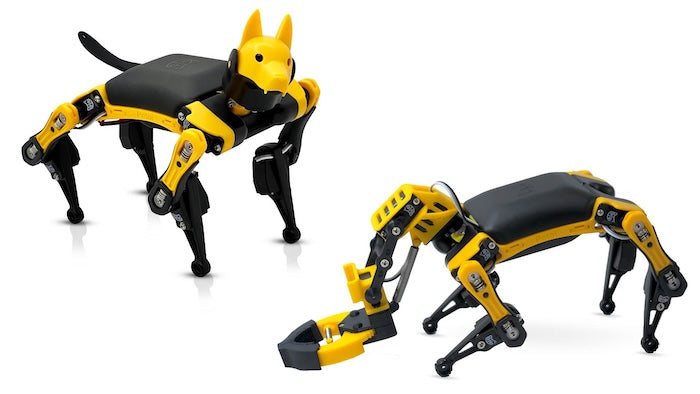
B2B Technical Assessment: Authentic Petoi Architecture vs. Generic Copies
Institutional buyers, universities, and regional consumer electronics brand distributors require deterministic hardware baselines. Below is the comparative validation audit conducted across our production lots.
| Evaluation Parameter | Petoi Bittle X Factory Standard | Petoi Nybble Bionic Cat | Generic Copycat Clones |
|---|---|---|---|
| Mainboard Controller | BiBoard (ESP32 dual-core 240MHz, 520KB SRAM) | BiBoard / NyBoard (Dual Core Architecture) | Unbranded 8-bit MCU without coprocessor |
| Actuator Specifications | 9x P1S Metal-Gear High-Speed Coreless Servos | 11x High-Precision Digital Bionic Servos | Plastic spur gears, high backlash & failure rate |
| Gait & Kinematics Engine | OpenCat C++ Inverse Kinematics with 200Hz Loop | OpenCat Dynamic Balance & Catenary Gait Curves | Hard-coded time delays, zero terrain adaptation |
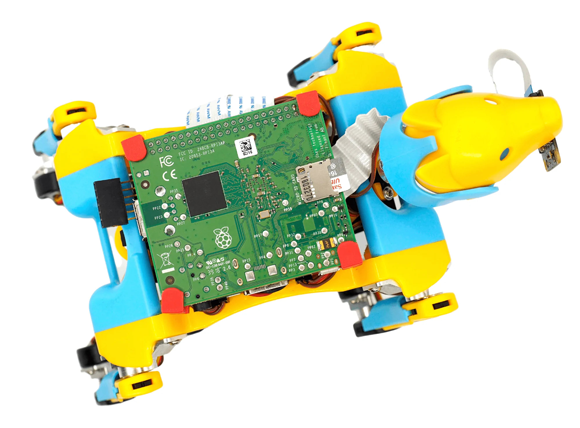
| Sensor & Edge Expansion | I2C / UART Bus, Raspberry Pi, Jetson Nano, AI Camera | AI Vision, Ultrasonic, Voice Recognition Module | Closed proprietary PCB, no expansion headers |
| CE Certification Scope | ✓ CE RED, EMC, LVD, RoHS 3 | ✓ CE RED, EMC, LVD, RoHS 3 | Self-declared CE without third-party lab test reports |
| Software Ecosystem | Petoi Desktop App, Skill Composer, C++, Python, Mind+ | Mind+, Block-based Scratch, Python, Arduino IDE | Static mobile app with unencrypted telemetry |
Global Procurement Trends Shaping the Robot Pet Industry (2025–2030)
Supply chain executives and enterprise buyers are shifting criteria from unit cost reduction to lifecycle durability, firmware adaptability, and multi-market regulatory clearance. Key vectors driving international purchasing include:
Modular Open-Ecosystem Procurement
Educational ministries and tertiary robotics departments reject proprietary ecosystems in favor of open platforms like OpenCat. Sourcing contracts prioritize models supporting native serial command sets, Raspberry Pi hats, and ROS2 middleware over closed 'black-box' consumer toys.
Stringent ESG & Battery Regulation
The European Union Battery Regulation (EU) 2023/1542 mandates clear carbon footprints, cell-level traceability, and user-removable energy modules. Procurement teams in the EU, UK, and North America enforce factory-certified UN38.3 test summaries, CE declarations, and repairable battery pack architectures.
Classroom-Pack Turnkey Adoption
K-12 school districts and vocational colleges are moving away from single-unit piecemeal purchases. B2B RFP frameworks mandate complete classroom bundle packs including pre-calibrated quadrupeds, spare actuator sets, multi-bay charging docks, and certified Scratch-to-Python progressive curricula.
OEM White-Label Customization
Enterprise clients require custom injected ABS colorways, branded firmware splash screens, and pre-flashed localized speech models. Factories providing rapid tooling iterations, custom PCB silkscreens, and tailored master-carton logistics provide an irreplaceable competitive edge.
Technological Evolution: From Scripted Actuation to Embodied Edge Intelligence
The quadruped companion robotics space is undergoing a generational shift. Primitive toy dogs functioned on fixed mechanical cams and cyclical timers. In contrast, modern bionic pets manufactured under the Petoi Bittle standard utilize continuous inverse kinematic solvers running on high-speed microcontrollers.
Looking ahead through 2030, robotic pet architectures are advancing across three primary axes: real-time edge multi-modal vision, field-oriented control (FOC) micro-brushless motors, and reinforcement-learning-derived gait primitives. Our engineering team integrates neural network accelerators capable of on-device human skeletal tracking, spatial obstacle depth mapping via time-of-flight (ToF) LiDAR, and autonomous recharging path planning.
Why Direct OEM/ODM Buyers Partner with Shenzhen Pbrobot Technology
With an open-source lineage dating back to 2018 and the founding of the globally recognized OpenCat framework, Shenzhen Pbrobot Technology Co., Ltd. combines research-grade software capability with industrial-scale manufacturing rigor.
Full Intellectual Property & OpenCat Heritage
We are the inventors, patent holders, and primary maintainers of the OpenCat bionic framework. Sourcing directly eliminates middleman licensing overhead and guarantees continuous firmware updates, bug fixes, and long-term SDK support.
Automated SMT & In-Line Quality Testing
Every controller board undergoes 100% automated optical inspection (AOI) followed by in-circuit testing (ICT). Robotic calibration fixtures verify zero-position drift, servo torque limits, and current draw on every joint prior to final packaging.
Global STEM Pedagogy & Free Curricula
Hardware without structured education creates channel resistance. We provide distributors and school systems with fully developed, battle-tested curricula covering block-based Scratch coding, embedded C++, kinematics, and Python vision algorithms.
Adopted by World-Class Laboratories and Educators Worldwide
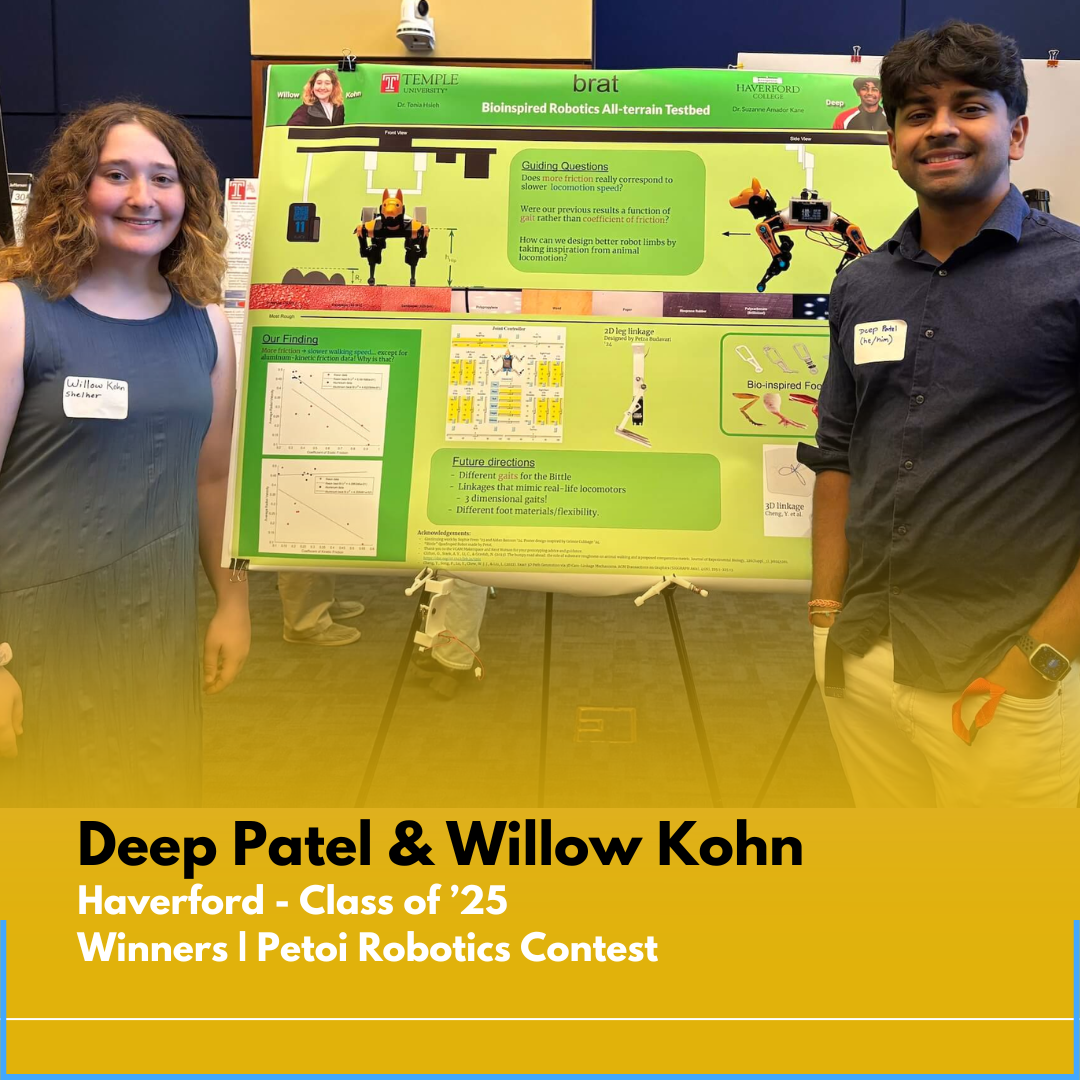
From university laboratories at CU Boulder and The Chinese University of Hong Kong to specialized STEM robotics academies spanning North America, Europe, and Asia, Petoi quadruped robots bridge the critical pedagogical gap between basic toy coding and multi-thousand-dollar industrial quadruped platforms.
Featured consistently across major media outlets including FOX Bay Area, IEEE Spectrum, Financial Times, and Make: Magazine, Petoi robotics kits have proven their mechanical resilience over hundreds of classroom contact hours. By combining injection-molded shock-absorbing components with high-speed digital coreless actuators, our factory builds robotic pets capable of surviving real-world educational environments while providing uncompromising research-grade extensibility.
Frequently Asked Questions for Sourcing & Procurement Teams
Direct answers addressing certification verification, minimum order quantities, customization scopes, test reports, and customs tariff HS-code classifications.
What specific test certificates are provided to verify CE compliance for European imports?
- RED 2014/53/EU: ETSI EN 300 328 (wideband transmission systems) and ETSI EN 301 489-1/-17 (electro-magnetic compatibility for radio equipment).
- EMC 2014/30/EU: EN 55032 emissions and EN 55035 immunity standards.
- LVD 2014/35/EU: EN 62368-1 electrical audio/video, information, and communication technology equipment safety.
- RoHS 3 (2011/65/EU + 2015/863): Heavy metals (Lead, Cadmium, Mercury, Hexavalent Chromium) and phthalates (DEHP, BBP, DBP, DIBP).
- Toy Safety (where applicable): EN 71 Parts 1, 2, 3 and electric toy safety standard EN 62115.
What are the minimum order quantities (MOQ) for standard vs. customized OEM orders?
Can Petoi Bittle quadrupeds be integrated with secondary single-board computers like Raspberry Pi and Jetson?
How does the factory manage spare parts, servo replacements, and lifecycle maintenance?
What are the recommended Harmonized System (HS) Codes for customs clearance?
- HS Code 9503.00.70: Other toys, put up in sets or outfits intended for educational assembly.
- HS Code 8479.50.00: Industrial robots or programmable educational robotic apparatus not elsewhere specified.
- HS Code 8543.70.99: Electrical machines and apparatus having individual functions.
What lead times should institutional procurement departments anticipate for volume deliveries?
Request Factory Pricing, CE Test Reports & Sample Evaluation
Are you planning an educational STEM procurement project, expanding your regional robotics distribution catalog, or seeking custom OEM bionic hardware manufacturing? Speak directly with our Shenzhen technical sales and engineering specialists today.