Precision Hardware Catalog
Featured Robotics Hardware & Embedded Control Platforms
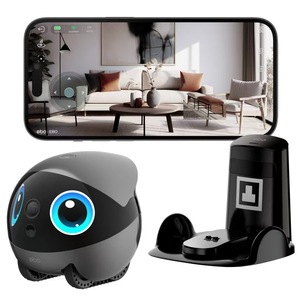
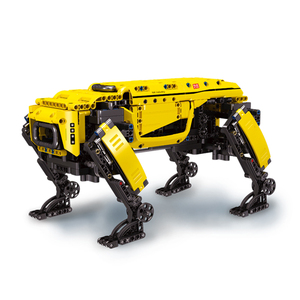
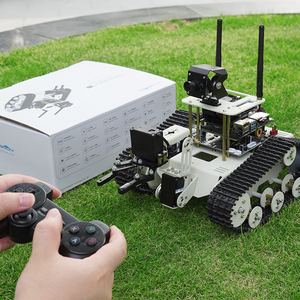
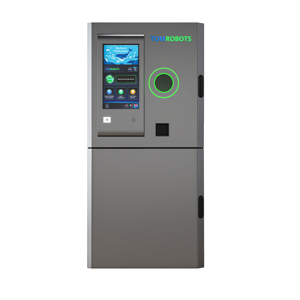
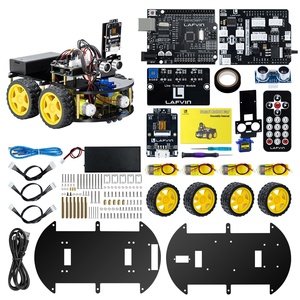
Direct factory supply for OpenCat quadruped kits, computer-vision companions, industrial reverse processing units, and high-degree-of-freedom robotic systems.

Enterprise Trust Factors
Why Global Robotics Labs Partner with Our Factory
From micro-servo recalibration to 9-axis IMU fusion firmware, discover the industrial manufacturing capabilities behind Petoi Bittle architecture.
High-Precision IMU Calibration
Every motherboard undergoes automated 6-axis/9-axis inertial measurement calibration. Zero-bias drift compensation ensures Petoi Bittle quadrupeds maintain real-time dynamic balance during complex gaits and sudden external shocks.
BiBoard ESP32 & NyBoard Architecture
Specialized SMT manufacturing lines optimized for high-density BiBoard ESP32 controllers and Arduino-compatible NyBoards, featuring integrated battery management, wireless Wi-Fi/Bluetooth stack, and fast PWM servo channels.
Rigorous Gait & Servo Stress Testing
Custom metal-gear coreless servos run through 72-hour continuous oscillation and thermal stress tests. Our injection tooling achieves high-impact durability without structural warpage, certified for heavy STEM classroom reuse.
Global Supply Chain Compliance
Full CE, FCC, RoHS, and MSDS documentation ready for international customs clearance. We offer flexible OEM/ODM runs, custom packaging, branded shell injection colors, and specialized STEM syllabus co-development.
Technical Deep Dive: The Critical Role of IMU Sensors in Petoi Bittle Quadruped Locomotion
In quadrupedal bionic engineering, dynamic stability across variable friction surfaces is the ultimate benchmark distinguishing rudimentary mechanical toys from sophisticated educational research platforms. At the core of the Petoi Bittle robotics architecture lies an intricate fusion of embedded inertial navigation and high-frequency inverse kinematics. The Inertial Measurement Unit (typically an MPU6050, ICM-42670, or comparable 6-to-9-axis sensor) acts as the biological vestibular system for the robot dog. Without deterministic low-drift IMU feedback, a miniature legged robot cannot compensate for joint lash, ground slope discrepancies, or momentum shifts caused by external collisions.
When sourcing Bittle-compatible robotics platforms from China's premier original design manufacturers (ODMs), engineering teams must evaluate sensor fusion at the firmware level. High-tier suppliers utilize proprietary digital motion processors (DMP) and Madgwick or Extended Kalman Filter (EKF) algorithms configured specifically for the low-latency cycle times required by the ESP32 BiBoard and Arduino NyBoard controllers. At 200Hz to 500Hz refresh rates, the onboard IMU continuously calculates Roll, Pitch, and Yaw matrices, outputting correction vectors directly into the OpenCat gaits engine. This allows the miniature quadruped to instinctively crouch, dynamically distribute torque to all eight leg servos, and perform self-righting maneuvers when inverted.
"Factory-level IMU calibration is not merely an electronic QA step; it is the fundamental prerequisite that allows an 8-DOF or 12-DOF legged robot to simulate real bionic gait behaviors without continuous manual trimming."
| Evaluation Parameter | Standard Commercial Grade | Industrial Petoi Bittle IMU Grade (Our Factory) | Impact on Quadruped Dynamics |
|---|---|---|---|
| Gyroscope Angular Drift | > 2.5° / minute | < 0.25° / minute (Factory Trimmed) | Eliminates diagonal tracking drift during sustained gait execution. |
| Accelerometer Noise Density | 180 µg/√Hz | 80 µg/√Hz (Multi-Stage Decoupled) | Suppresses high-frequency motor vibration from skewing roll-pitch estimation. |
| Sampling & Fusion Frequency | 50 Hz - 100 Hz (Software Polling) | 200 Hz - 500 Hz (Hardware DMP / Interrupt Driven) | Enables sub-millisecond reaction times for self-righting after falls. |
| Thermal Bias Drift (-10°C to 50°C) | Uncompensated (±0.08°/s/°C) | Active Firmware Thermal Matrix Compensation | Guarantees classroom-to-outdoor gait consistency across seasons. |
For enterprise educational buyers, institutional universities, and robotics distributors, ensuring factory-level calibration is paramount. Uncalibrated IMU boards result in erratic gait oscillations, premature coreless servo motor burnout, and frustrating classroom experiences for novice learners attempting basic block-based programming. Our facility implements individualized board-level vibration dampening mounts and automated robotic arm testing rigs to certify pitch/roll stability prior to global dispatch.
Strategic Market Outlook
Future Procurement Trends in Quadruped Robotics & IMU Systems
Anticipate market evolutions, sensor upgrades, and supply chain transitions shaping Bittle and STEM bionic kits through 2026–2030.
Edge AI Fusion with IMU Kinematics
Next-generation bionic kits are shifting from simple open-loop gait commands to sensor-fused spatial navigation. Procurement managers are increasingly requesting ESP32-S3 and K210/Kendryte neural-accelerated co-processors. By pairing optical camera feeds with 6-axis IMU acceleration data, robots like Bittle can perform visual-inertial odometry (VIO), enabling indoor autonomous navigation without expensive LiDAR sensors.
Smart Magnetic Absolute Encoders
While traditional educational robot dogs rely on analog potentiometer feedback servos, industrial procurement requirements are moving toward contactless magnetic encoders. By integrating magnetic encoder feedback directly with IMU state vectors, the robot detects joint stall incidents instantly, dynamically redistributing current and eliminating gear stripping during intense athletic gaits or backflips.
Turnkey Curriculum & ROS 2 Portability
Global educational tenders in North America, Europe, and East Asia no longer procure isolated hardware. Successful bids demand turnkey pedagogical scaffolding. Buyers seek seamless migration from Scratch-based block programming to ROS 2 (Robot Operating System) micro-nodes running via serial bridge to Raspberry Pi or Jetson platforms, supported by pre-validated C++ open-source libraries.
Procurement Intelligence
Frequently Asked Questions (Sourcing & Technical FAQ)
Critical guidelines for academic institutions, OEM contractors, and global electronics distributors.
What exact IMU sensor chips are integrated into Petoi Bittle compatible mainboards? +
Our standard production runs integrate high-reliability InvenSense/TDK MPU6050 or low-power ICM-series 6-axis MEMS MotionTracking devices, combining a 3-axis gyroscope and a 3-axis accelerometer with an onboard Digital Motion Processor (DMP). For specialized high-tier research batches, we offer custom SMT mounting of 9-axis chips (including magnetometers) or Bosch Sensortec BMI series upon OEM request to satisfy specific aerospace or dead-reckoning syllabus specifications.
Can the factory support custom chassis colors, injection tooling, and OEM branding? +
Yes. As a direct China manufacturing plant, we support complete private labeling for educational distributors and franchise robotics centers. Our facilities feature in-house precision mold tooling for high-impact ABS/polycarbonate injection components, silk-screen controller logos, customized packaging, and flash-burned custom firmware initialization routines to load your proprietary bootloader or school logos out of the box.
How does the Petoi Bittle motherboard interface with external SBCs like Raspberry Pi or Jetson Nano? +
The controller (both NyBoard and BiBoard ESP32) provides dedicated 2.54mm UART communication headers along with I2C expansion rails. Compact micro-computers such as the Raspberry Pi Zero or Pi 3A+ can be physically mounted atop the robot's backframe, communicating bi-directionally via high-speed serial protocols. Python API modules send high-level motion and balance commands to the OpenCat framework while the onboard IMU manages real-time sub-millisecond servo stabilization.
What are the typical Lead Times and MOQ requirements for bulk educational orders? +
For standard stocked models (Bittle X, Nybble, and complementary STEM sensor packs), dispatch can be executed within 3 to 7 business days. For customized OEM runs requiring custom injection dyes, specialized servo winding, or customized educational blister packaging, standard production cycles range between 18 and 25 business days. Minimum Order Quantities (MOQ) start at 50 units for basic branding and 500 units for fully customized mechanical injection alterations.
How does your factory prevent IMU sensor zero-point drift during transit and long-term storage? +
Every controller board undergoes a secondary burn-in test post-reflow, followed by an automated 6-point rotational calibration cycle stored directly in EEPROM non-volatile memory. Furthermore, our firmware includes an automatic zero-point tare routine during startup: when the user powers on Bittle on a level surface, the IMU recalibrates its bias vectors within the first 1.5 seconds, ensuring environmental temperature shifts do not impact walking trajectory.