
Direct From Precision Production Lines
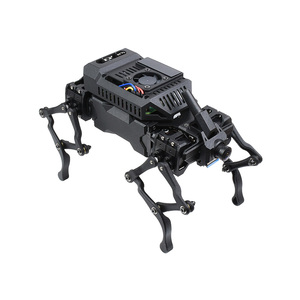
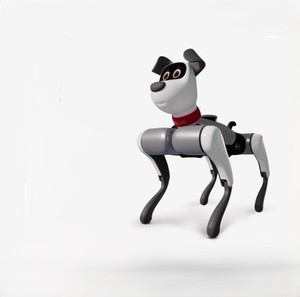
Featured Robotic Kits, AI Actuators & Smart Platforms
Source industry-proven robotics kits, dynamic biomimetic quadrupeds, high-load servo joints, and automated industrial precision apparatus direct from top-tier Chinese manufacturing facilities.



±0.08°
Magnetic Encoder Precision
>150,000
Bionic Actuation Cycles Tested
3.8 kg·cm
Peak Dynamic Joint Torque
100%
OpenCat & ESP32 BiBoard Compatible
Technical Engineering White Paper
Overcoming Legged Kinetic Hurdles: The Science of High-Density Micro Servo Upgrades
Why modern quadruped robotics requires transitioning from plastic analog gearboxes to high-tensile alloy metal gears, magnetic contactless encoders, and serialized bus communication.
Eliminating Gear Stripping & Backlash
The standard miniature quadruped robot dog operates under dynamic loading conditions completely unlike fixed robotic arms or radio-controlled hobby planes. In a legged locomotion robot such as Petoi Bittle or Nybble, each foot strike delivers high-frequency impact loads back into the gearbox train. In entry-level plastic or POM gear servos, repetitive ground contact quickly shears pinion teeth or introduces cumulative mechanical backlash exceeding 3° to 5°.
Upgraded servos engineered by top Chinese factories incorporate hardened aviation-grade 7075 aluminum alloys and high-carbon copper-steel alloy gearsets. These precision-milled gear trains reduce mechanical play down to under 0.5°, while delivering yield strength capable of absorbing sudden falls, jumping impacts, and aggressive trotting gaits without mechanical fatigue or tooth failure.
Precision Contactless Magnetic Encoders
Traditional hobby servos rely on conductive carbon film potentiometers to calculate joint positioning. When a quadruped completes thousands of reciprocating steps during locomotion research, physical wiper brushes wear out, introducing deadband drift, signal jitter, and joint twitching. This degradation alters the kinematics solver's equilibrium, resulting in robot drift and erratic gait patterns.
Our Tier-1 industrial upgrade servos replace carbon tracks with 12-bit to 14-bit contactless magnetic absolute encoders (such as AS5600/AS5048 architectures). By detecting angle via magnetic field rotation without physical friction, the feedback loop guarantees virtually infinite working life, immune to carbon carbonization, dust, or moisture, while providing smooth angular tracking at 0.088° resolution.
Industry Sourcing Forecast 2026–2030
Future Procurement Trends in Quadruped Actuation and Biomimetic Hardware
Strategic purchasing insights for universities, global distributors, STEM academies, and research institutions seeking sustainable supply chains.
Serial Bus Communication Replacing PWM
Conventional 9-gram and 12-gram micro quadrupeds route separate three-pin PWM wire bundles for all 9 to 12 degrees of freedom back to a central board. This harness cluster creates mechanical friction inside joint linkages and elevates electrical interference. Procurement is decisively pivoting toward UART/RS485 half-duplex daisy-chain serial bus servos. A single serial line links all shoulder, thigh, and knee servos, reducing assembly labor by 60% and enabling bi-directional telemetry feedback.
Real-Time Hardware Telemetry Sensing
Modern machine learning frameworks and reinforcement learning algorithms (such as NVIDIA Isaac Gym and PyTorch gait generators) require continuous real-time state feedback. Modern upgrade servos integrate micro-embedded temperature thermistors, current-shunt load monitoring, and supply voltage sensors. If an educator's code commands an impossible joint posture, the servo detects current surges and initiates soft stall-protection before burning windings.
Coreless & Brushless DC Actuation Downsizing
While iron-core brushed DC motors historically dominated sub-20g actuators, Chinese manufacturing ecosystems are driving the miniaturization of high-pole brushless DC (BLDC) torque motors and hollow-cup coreless coils. By removing heavy iron rotors, rotational inertia drops by 70%, yielding lightning-fast acceleration response times under 0.06s/60°—empowering Bittle robots to perform dynamic backflips, agile recovery rolls, and steady bounding gaits.
Factory Benchmark Specifications
Engineering Grade Comparison Matrix: Factory Original vs. Industrial Upgrade
Compare structural tolerances, torque densities, and control interfaces across actuator tiers.
| Performance Metrics | Standard Stock Servo | Factory Metal Gear Servo | Pro Serial Bus Magnetic Servo (Latest Upgrade) |
|---|---|---|---|
| Gearbox Metallurgy | Molded Nylon / POM Polymer | Copper-Brass & Aluminum Alloy | Hardened 7075 Aviation Al-Alloy + Titanium Plating |
| Position Feedback Sensor | Carbon Conductive Potentiometer | Conductive Plastic Film | 12-Bit Contactless Hall Magnetic Encoder |
| Stall Torque @ 7.4V | 1.5 kg·cm | 2.7 kg·cm | 3.8 kg·cm – 4.2 kg·cm Peak |
| Dynamic Backlash | 3.5° – 5.0° Play | 1.5° – 2.0° Play | < 0.45° Ultra-Low Clearance |
| Control Interface | Analog PWM (50Hz - 330Hz) | Digital PWM (333Hz) | High-Speed Daisy-Chain UART (1.0 Mbps Bus) |
| Integrated Telemetry | None (Open-Loop Command) | None | Position, Temperature, Voltage & Real-Time Load Current |
| Mean Time Before Failure (MTBF) | ~80 Operating Hours | ~350 Operating Hours | >1,500 Operating Hours Continuous Dynamic Load |
Why Partner With Us
Enterprise Advantages: Shenzhen Precision Robotics Manufacturing Ecosystem
Bridging open-source innovation with Tier-1 industrial quality control, agile prototyping, and global logistics fulfillment.
Native OpenCat & Open-Source Ecosystem Integration
Unlike third-party generic RC hobby servo vendors who repackage generic flight-control actuators, our manufacturing engineering team works directly around the OpenCat kinematics framework, Arduino NyBoard, and ESP32 BiBoard architectures. Every splined horn, centering firmware offset, and voltage curve is verified to match the mechanical mounting geometry and software library expectations of Petoi Bittle X, Nybble Q, and custom DIY quadruped designs.
Strict Automated Quality Assurance & Lifetime Testing
Quality reliability is verified on automated test benches. Each production batch undergoes 100% computerized zero-point centering calibration, dynamic torque hysteresis analysis, and multi-hour high-temperature stall resistance aging. We operate cleanroom surface-mount assembly (SMT) lines certified under ISO9001, CE, RoHS, and FCC directives, providing distributors and institutional clients with audit-ready documentation and batch serialization.
Purchasing & Technical FAQ
Frequently Asked Questions: Petoi Bittle Servo Upgrades & OEM Sourcing
Comprehensive engineering guidance for school procurement leads, university researchers, and supply chain managers.
Why is replacing stock servos with metal gear magnetic upgrades recommended for Bittle robots?
Standard hobby-grade plastic servos are engineered for steady, low-impact RC aeromodelling control surfaces. In a dynamic legged quadruped like Bittle, each step causes high shock load cycles that quickly strip nylon gear teeth. Upgrading to metal gear servos with magnetic encoders delivers 2.5x more stall torque, eliminates stripped teeth from drops, and avoids carbon wiper wear, keeping gait calibration stable over semesters of intensive classroom use.
Are these upgraded servos fully compatible with the OpenCat C++ framework and ESP32 BiBoard?
Yes. Our specialized upgrade actuators match the exact physical form factor, 2.54mm header pinouts, spline counts (such as 21T or 25T micro configurations), and PWM pulse-width timing (500us–2500us) used by the Petoi OpenCat codebase. For advanced users adopting high-speed serial bus variants, we supply dedicated C++ and Python communication libraries directly compatible with ESP32, Raspberry Pi 4B, and Jetson Nano boards.
How do magnetic encoders prevent the joint drift and jitter common in older robot pets?
Older analog servos rely on physical metal fingers brushing against a resistive carbon track. Over thousands of oscillation cycles, friction degrades the carbon layer, causing deadband dead zones, micro-sparking, and signal electrical noise—manifesting as irritating leg jittering or uneven walking lines. Magnetic encoders rely on an integrated Hall sensor chip reading an diametrically magnetized disk across an air gap; because there is zero friction contact, position sensing remains accurate to ±0.08° across millions of cycles.
Can our engineering lab or university request custom torque ratings, wire lengths, or custom branding?
Absolutely. As direct manufacturing partners located in the heart of China’s electronics corridor, we support flexible OEM/ODM modifications. Options include custom wire harness lengths with anti-interference twisted pairs, custom gear ratios (trading speed for higher holding torque), specialized aluminum heat-sink middle cases, laser-etched custom logos, and pre-flashed custom firmware with unique servo ID assignments for high-volume production orders.
What is the typical minimum order quantity (MOQ) and lead time for factory-direct procurement?
Standard upgrade kits and sample evaluation batches are kept in stock with dispatch timelines of 48–72 hours via DHL/FedEx/UPS international air express. For customized institutional orders or volume distributor shipments (500 to 10,000+ units), typical factory production lead time spans 15 to 25 business days. We provide comprehensive export documentation, commercial invoices, and global door-to-door DDP shipping solutions.
Upgrade Your Robotic Fleet With High-Precision Chinese Actuators
Whether you require sample replacement packs for academic labs or seek bulk OEM production partnerships for custom bionic robots, our engineering support specialists are ready to help.