Hardware Ecosystem
Featured Quadruped Platforms & Integrated Sensing Modules
Precision-engineered bionic robots, intelligent vision controllers, and real-time sensory hardware developed for academic research, maker labs, and OEM automation.

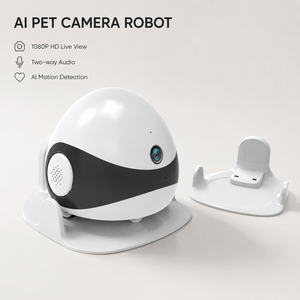
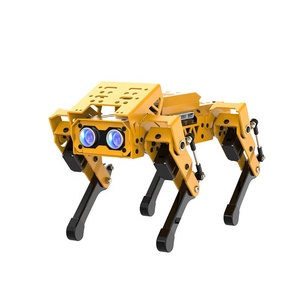
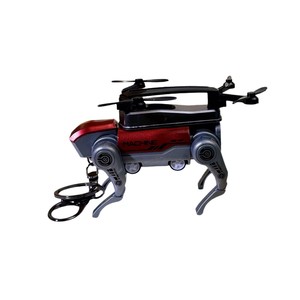
Need Custom Sensor Calibrations or Tailored Kinematic PCBs?
Collaborate directly with Shenzhen Pbrobot Technology engineering specialists for turnkey firmware customization, custom I2C/SPI sensor integrations, and bulk institutional exports.
Architecture & Kinematics
Dynamic Balance via Low-Latency Closed-Loop Kinematic Sensing
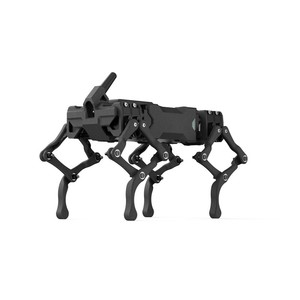
The operational fidelity of compact quadruped platforms like Petoi Bittle hinges entirely on high-frequency feedback loops between the internal inertial measurement units (IMU), motor position sensors, and the motion controller (such as the ESP32-based BiBoard or Arduino-compatible NyBoard). Unlike static multi-wheeled robots, a bionic quadruped experiences continuous structural vibration, dynamic inertia shifts, and sudden impact shocks during high-speed trots and dynamic jumps.
Our OEM Petoi Bittle Motion Sensor modules feature calibrated 6-axis and 9-axis MEMS sensor topologies that execute real-time pitch, roll, and yaw calculation directly on an onboard Digital Motion Processor (DMP). This offloads mathematical floating-point routines from the host MCU, guaranteeing 500Hz attitude state reporting with deterministic jitter under 1.2 microseconds.
6-Axis / 9-Axis DMP Filtering
Hardware Zero-Drift Calibration
OpenCat Kinematics Synchronization
Ultra-Compact 2.54mm Pitch Bus
| Kinematic Parameter | Standard Commercial IMU | Pbrobot Custom OEM Sensor |
|---|---|---|
| Attitude Refresh Rate | 50 Hz – 100 Hz | 200 Hz – 500 Hz (Interrupt Driven) |
| Dynamic Gyro Drift | ±2.5° / minute | < ±0.4° / minute (Thermal Compensated) |
| Interface Latency | > 12 ms (Polling I2C) | < 2.1 ms (Optimized DMA / SPI) |
| Vibration Filtering | Single Low-Pass Filter | Dual-Stage Cascaded Sallen-Key Hardware Filter |
| Framework Integration | Generic Raw Data | Native OpenCat Kinematics Library Pre-Mapped |
| Operating Voltage | 3.3V or 5V (Fixed) | Wide-Input 2.7V – 5.5V Tolerant LDO Rail |
Industry Insights
Technological Development Trends in Quadruped Motion Sensing
How rapid breakthroughs in edge microcontrollers, Neuromorphic AI perception, and embedded sensor fusion are transforming bionic robot agility.
1. Real-Time Embedded Micro-Attitude Fusion
Traditional bionic quadruped systems struggled with cumulative sensor drift and false gravity vectors induced by sudden accelerations. The modern trend replaces basic accelerometers with hardware-integrated Kalman filters and Madgwick filter pipelines running directly on the sensor core, allowing sub-millimeter balance stability during uneven stair navigation.
- On-chip Mahony/Madgwick orientation algorithms
- Zero-latency gait impact identification
- Extended stability across variable foot-ground contact
2. Multi-Modal Vision & Inertial Cross-Coupling
The industry is transitioning toward hybrid visual-inertial odometry (VIO). By bridging Petoi Bittle motion sensor streams with AI vision micro-cameras via high-speed serial UART, robots can generate local spatial occupancy maps, predict obstacle trajectories, and modify limb kinematic positions dynamically before foot impact occurs.
- Sub-pixel optical flow correlation
- Real-time simultaneous localization and mapping (SLAM)
- Autonomous path-planning at micro-watt scale
3. Modular Edge Compute & Bus Unification
Heterogeneous educational setups demand seamless plug-and-play adaptability. The latest motion sensing architectures unify pinouts into standard 2.54mm pitch headers and quick-release Qwiic/I2C sockets, making them interchangeable between Raspberry Pi Zero/3A+, micro:bit, Arduino, and ESP-NOW swarm networks.
- Standardized modular pinout architectures
- Bidirectional drop-in support for C++, Python, and Mind+
- Multi-robot swarm synchronized telemetry
Procurement Intelligence
Future Sourcing & Procurement Trends for OEM Robotics
Strategic guidelines for university engineering labs, STEM curricula buyers, and distributor chains navigating international electronics supply pipelines.
Open Architecture Mandates
Global procurement teams in North America, Europe, and the APAC region are explicitly moving away from proprietary, black-box robotics systems. Institutional buyers demand hardware governed by open frameworks such as OpenCat, ensuring curriculum stability, independent spare-part accessibility, and zero vendor lock-in over multi-year grant cycles.
Dual-Grade Component Validation
Procuring motion sensors for university robotics camps requires components certified for both industrial durability and classroom mechanical abuse. Sourcing strategies focus on supplier-backed MTBF (Mean Time Between Failures) ratings, electrostatic discharge (ESD) protection rails, and verified servo-stall overload tolerance.
Turnkey Curriculum Integration
B2B buyers are selecting hardware vendors that supply fully integrated course modules alongside the physical circuit boards. Purchasing decisions prioritize suppliers that provide step-by-step block-based coding, ROS interfaces, and C++ gait development tutorials that compress academic onboarding from months to days.
#1
Most-Starred GitHub Quadruped (OpenCat)
4.89 / 5
Verified Educator Satisfaction Index
300+
Global Universities & Maker Centers Served
< 72 Hours
OEM Prototyping Response Guarantee
Enterprise Authority
Why Global Importers Partner with Shenzhen Pbrobot Technology
Direct manufacturer supply lines, rigorous quality controls, and unmatched open-source quadruped engineering expertise.
Pioneer of the OpenCat Quadruped Ecosystem
Founded on the lineage of the world's most popular open-source quadruped robot pet framework, we deliver native hardware-software synergy across Bittle X, Nybble Q, and custom industrial prototypes.
- Original architectural authors & developers
- Deep low-level firmware optimization on ESP32 & STM32
- Active global community offering collaborative bug testing
Full Turnkey OEM / ODM Sensor Customization
From initial schematic capture and layout optimization to SMT pick-and-place and calibrated multi-point functional test jigs, we design sensor solutions aligned with client packaging, voltage, and bus demands.
- Custom PCB dimensions and mounting footprint tailoring
- Bespoke firmware register mapping for custom telemetry
- Full ESD and EMI compliance testing for export
Global Logistics & Reliable Institutional Support
We serve distributor chains, school boards, and corporate R&D laboratories globally. With streamlined international express shipping, comprehensive warranty frameworks, and documented customs handling, your deliveries arrive reliably on schedule.
- DDP, FOB, and CIF international terms supported
- 30-day structured institutional return policies
- Dedicated multilingual technical account teams
Procurement & Technical FAQ
Frequently Asked Questions by Technical Buyers & Importers
Essential clarifications covering interfacing protocols, electrical tolerances, minimum order quantities, and custom hardware engineering.
Which sensors and modules can be custom integrated into Petoi Bittle quadrupeds?
Our quadruped platforms natively support an expansive ecosystem of auxiliary modules. These include calibrated 6-axis and 9-axis IMU motion sensors, sound and acoustic localization detectors, ambient light arrays, precision touch/collision tactile sensors, smart AI visual recognition cameras, digital voice command modules, and robotic arm gripper assemblies. Modules interface seamlessly via standard 2.54mm pitch headers on the BiBoard or NyBoard controllers.
What communication buses and connection methods do these motion sensors use?
Our OEM motion sensor boards communicate natively over fast-mode I2C (up to 400kHz) and high-speed SPI channels. For robotics telemetry and external controller streaming, data outputs via hardware serial UART, Bluetooth LE, and Wi-Fi across ESP32 topologies, with full serial protocol compatibility for remote control consoles and host computer scripting.
How does the motion sensor assist dynamic gait calibration in the OpenCat framework?
The sensor sends real-time angular velocity and linear acceleration vectors into the OpenCat kinematic engine. The software calculates center-of-mass trajectory offsets and instantaneously injects counter-rotational micro-angles into the leg servos. This closed-loop cycle prevents tipping, recovers stance after unexpected impacts, and maintains flat body leveling across varied surfaces.
Which single-board computers (SBCs) can process sensor telemetry directly?
The motion sensory stream communicates natively with Raspberry Pi (Pi 4B, 3A+, and Pi Zero 2W), NVIDIA Jetson Nano, and micro:bit. Compact SBCs like the Pi Zero can be mounted directly on top of the Bittle chassis, interfacing over wired UART using open-source Python libraries to execute onboard edge perception, ROS nodes, and SLAM odometry routines.
What programming environments and software stacks are supported for OEM developments?
We provide full multi-tier software support. Primary and middle school STEM educators can leverage drag-and-drop block-based coding (Scratch / Mind+). High schools, research institutions, and corporate makers can leverage pure C++ within the Arduino IDE, PlatformIO, or ROS/Python on external micro-computers, accompanied by open-source gait composition software.
What is the procurement procedure and lead time for volume orders or custom OEM runs?
Institutional educators, enterprise laboratories, and regional distributors can click the "Get a Quote" livechat trigger to connect immediately with our engineering and procurement team. Standard production kits and sensor sets ship in 3 to 7 business days, while custom PCB layout, connector adaptations, and custom firmware revisions usually take 2 to 4 weeks depending on batch volume.