Featured Hardware Accessories & Companion Product Ecosystem
Direct factory provisioning covering robotic accessory lines, companion tag identifiers, and precision interactive training accessories designed for global volume sourcing.


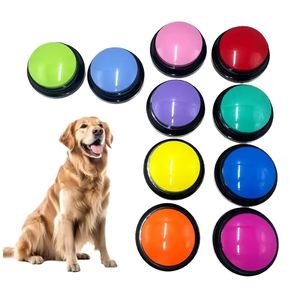
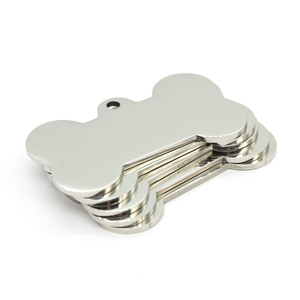
1. Executive White Paper: The Industrialization of Bionic Quadruped Robotics
The consumer and institutional robotics markets have undergone an unprecedented paradigm shift over the past half-decade. What was once confined to multimillion-dollar military research facilities or closed-door academic experiments has now democratized into accessible, scalable, and modular hardware. At the forefront of this revolution stands the quadruped bionic architecture—epitomized by the Petoi Bittle platform. Modern educational boards, university laboratories, and commercial robotic designers demand agile, bio-inspired kinematic models capable of moving beyond simple differential wheeled mechanisms. Quadruped robots provide a dynamic simulation of bio-locomotion, inverse kinematics, center-of-mass stabilization, and real-time obstacle navigation.
As an established OEM/ODM factory and primary manufacturer specializing in bionic quadruped systems, Shenzhen Pbrobot Technology Co., Ltd. addresses the crucial chasm separating rapid prototype concepting from full-scale commercial manufacturing. Producing a palm-sized programmable quadruped such as Bittle X or its open-source derivatives requires far more than surface-mount PCB assembly. It demands a holistic engineering methodology integrating micro-servo torque optimization, spring-damper compliance design, high-frequency bus communication, low-latency sensory feedback loops, and open embedded system compatibility.
2. Deep-Dive Hardware Architecture: From NyBoard to BiBoard ESP32
The technological evolution of our factory manufacturing capabilities reflects the broader evolution of embedded edge processing. Originally grounded in the specialized NyBoard (an ATmega328P subsystem coupled with an auxiliary PWM servo driver), our manufacturing lines now churn out the industrial-grade BiBoard based on dual-core ESP32 microcontrollers. Operating at clock speeds up to 240 MHz with integrated Bluetooth 4.2 LE and 2.4 GHz Wi-Fi, the BiBoard platform empowers OEM/ODM purchasers to implement advanced edge algorithms directly on-device.
Factory customization parameters for procurement teams include comprehensive mainboard redesigns, specialized daughterboards, custom pin headers (such as standard 2.54 mm spacing or lockable JST interfaces for harsh educational environments), and precision integration with single-board computers (SBCs). Our facilities accommodate direct mounting assemblies for Raspberry Pi Zero, Pi 3A+, Pi 4, and wireless connectivity arrays designed to communicate over UART high-speed buses directly with NVIDIA Jetson Nano edge AI modules.
3. Full-Stack OEM/ODM Solutions: Custom Enclosures, Actuation, and Firmware
Shenzhen Pbrobot Technology Co., Ltd. delivers turnkey, vertical integration across four core engineering pillars:
Mechanical & Mold Tooling: We maintain precision injection molding tooling capable of producing high-durability, impact-resistant ABS-polycarbonate composite shells. For bespoke commercial ventures requiring distinctive industrial designs, our tooling engineers construct customized multi-cavity injection molds, customized chassis colorways, pad printing, and laser engraving. We also support agile low-volume prototyping utilizing high-precision industrial SLS and SLA 3D printing facilities.
Actuation Calibration & Custom Servos: A quadruped's longevity is dictated entirely by its actuators. Our factory works directly with specialized servo motor production lines to configure high-torque, coreless micro-servos featuring precision metal-plastic hybrid gearing, metal output splines, customized gear-train reduction ratios, and over-current protection circuitry preventing stall-induced burnouts during rigorous student laboratory testing.
Firmware, Drivers, & Software Stacks: Leveraging the open-source OpenCat robotics framework, our firmware team configures white-label operating builds. We engineer custom gait balance algorithms, specialized voice recognition dictionary mappings for on-board DSP voice chips, tailored mobile applications (iOS/Android Flutter frameworks), and branded block-coding environments (custom Scratch/Blockly instances) tailored to our clients' regional educational curricula.
Product Sourcing & Procurement Trends (2025–2030)
Strategic trajectory analysis for institutional buyers, distributors, and technology program directors evaluating long-term capital allocation in bionic robotics.
Total Cost of Ownership vs. Scalability
Procurement teams are shifting away from closed, high-cost platforms ($3,000–$10,000 per unit) toward modular, sub-$300 bionic quadrupeds. By leveraging standardized open hardware and replaceable components, institutions achieve 10x higher student-to-robot ratios without sacrificing algorithmic depth.
Edge AI & Vision Module Convergence
Sourcing specifications increasingly demand native integration with embedded neural compute modules. Modern classroom tenders mandate real-time facial tracking, object classification, visual line-following, and AprilTag pose estimation directly operable via onboard micro-cameras.
Modular Mechanical Manipulation
Quadrupeds are evolving from pure exploratory walkers into multi-functional manipulators. Future sourcing models require modular expansion ports capable of accommodating 2-DOF or 3-DOF robotic arm grippers to teach coordinated locomotion-manipulation kinematics.
Curriculum-Tethered Hardware Procurement
Hardware without comprehensive educational pathways faces rapid obsolescence. Global buyers prioritize suppliers offering standardized, turn-key teaching resources that bridge foundational visual block-coding directly with industrial C++, ROS (Robot Operating System), and Python stacks.
Green Electronics & Regulatory Compliance
Regulatory scrutiny around institutional electronics is tightening across the EU and North America. Procurement protocols mandate full factory compliance with RoHS 2.0, REACH, CE-RED, FCC Part 15B, and UN38.3 lithium battery transportation safety certifications.
Technological Development Trends in Quadruped Robotics
Key engineering milestones steering the next generation of bionic robotics engineering and mass manufacturing.
1. Reinforcement Learning (RL) to Real Hardware (Sim-to-Real)
The frontier of quadruped software development has moved beyond hand-tuned kinematic state machines. Future iterations of Bittle-compatible architectures utilize physics engines (such as NVIDIA Isaac Sim, MuJoCo, and PyBullet) to train deep reinforcement learning neural policies in cloud simulations. Once converged, these policies are compiled into lightweight neural networks capable of executing on edge microcontrollers. Our factory engineers work continuously to optimize motor latency, feedback precision, and joint rigidity to ensure minimal Sim-to-Real transfer error.
2. Compliant Actuation and Closed-Loop Feedback
Next-generation bionic robotics demands higher dynamic elasticity to absorb unpredictable foot-ground impacts. While high-end commercial quadrupeds utilize quasi-direct-drive (QDD) brushless motors with high gear ratios, our R&D division is developing smart miniature servos embedded with magnetic rotary encoders. This provides full 360-degree absolute positional feedback, current-sensing torque estimation, and mechanical compliance directly in an ultralight, educational footprint.
3. Multi-Modal Sensory Fusion
Modern bionic dogs are no longer limited to standard ultrasonic ranging sensors. The ongoing hardware transformation integrates micro-LiDAR arrays, multi-channel TOF (Time-of-Flight) depth sensors, and spatial microphone arrays for beamforming voice localization. This multi-modal sensory input enables true dynamic SLAM (Simultaneous Localization and Mapping) in classroom environments, allowing students and researchers to implement autonomous search-and-rescue simulations within desktop bounds.
Factory Strengths & Industrial Manufacturing Edge
Based in the global hardware epicentre of Shenzhen, we provide end-to-end reliability, rigorous quality engineering, and unmatched scale.
OpenCat Core Heritage
Direct collaborative lineage with the creator of OpenCat, guaranteeing genuine architectural compliance, pristine firmware source access, and native compatibility across all official libraries.
Complete Curriculum Suites
We eliminate deployment friction by providing battle-tested, modular STEM educational coursework—spanning visual drag-and-drop Scratch blocks up to professional C++ robotics logic.
100% In-House Stress Testing
Every batch of high-precision servos and BiBoard microcontrollers undergoes thermal cycling, continuous stall endurance verification, and dynamic drop testing to ensure zero failure rates.
Global Tier-1 Delivery Logistics
Comprehensive export compliance, secure packaging, DDP shipping execution worldwide, and dedicated B2B logistics channels managing hazardous lithium-ion certifications smoothly.
Frequently Asked Questions for B2B Buyers
Clear, direct answers regarding custom engineering, minimum order quantities (MOQs), delivery lead times, and system expansions.
What is the standard MOQ for custom OEM/ODM orders?
Can the robot integrate secondary processors like Raspberry Pi and NVIDIA Jetson?
What certifications accompany mass shipments for institutional compliance?
Are kits supplied pre-assembled or as unassembled classroom packs?
What lead times should institutional procurement departments anticipate?
Ready to Scale Your Quadruped Robotics Sourcing?
Connect directly with our senior factory engineering team to request detailed technical white papers, sample units, custom quotation matrices, or comprehensive distributor partnership terms.
Inquire Now