Dead-Band Precision
Peak Dynamic Stall Torque
Cycle Durability Standard
OpenCat Firmware Sync
Verified Actuator Hardware & Bionic Robotics Platforms
High-reliability replacement servos, modular educational kits, and robotic testbeds designed for immediate integration into high-cycle engineering workflows.
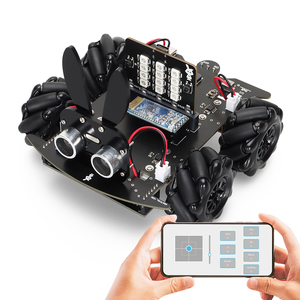
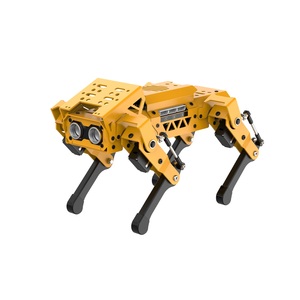
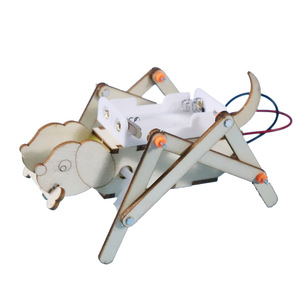
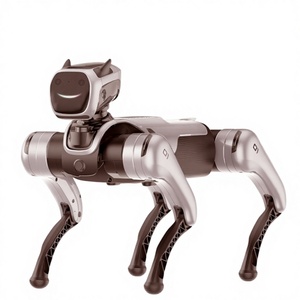
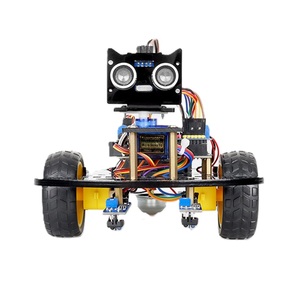
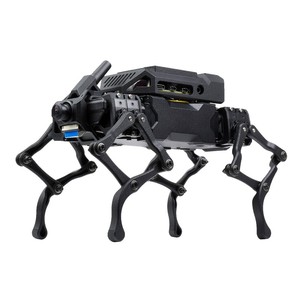
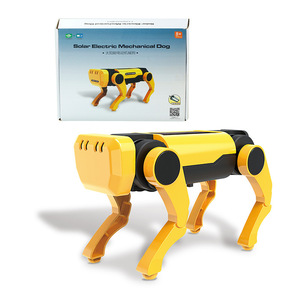
Engineering the Kinematic Baseline: Micro Servo Actuation in Bittle Platforms
Biomimetic quadruped architectures such as the Petoi Bittle platform impose unique and unforgiving stress patterns on sub-micro positional servos. Unlike traditional robotic arms operating in closed-loop static trajectories or wheeled platforms requiring continuous uniform rotary velocity, a palm-sized quadruped requires high-frequency cyclical shock absorption, rapid angular velocity shifts, and extreme holding torque during complex bipedal and trotting gaits.
In standard OpenCat operating environments, each of the nine articulating joints (four shoulders, four knees, and optional neck/gripper axes) continuously processes dynamic Pulse-Width Modulation (PWM) duty cycles varying between 500μs and 2500μs. When executing dynamic maneuvers like forward trots, backward rolls, or recovery flips, standard plastic nylon gear trains experience extreme shear stress, resulting in sheared splines and lost calibration. Our specialized OEM/ODM replacement servos utilize powder-metallurgy brass and hardened titanium-aluminum composite gear trains with reinforced center shafts, eliminating tooth fatigue and structural failure under rapid continuous load cycles.
Furthermore, internal coreless DC motor windings are calibrated with high-permeability neodymium magnets to optimize torque density within a 9g to 13g envelope. A low-internal-resistance potentiometer paired with proprietary microcontroller feedback loops yields an operational dead-band of less than 2 microseconds, ensuring exact spatial positioning and gait symmetry vital for stable autonomous balance algorithms.
Emerging Procurement Trends in Small-Scale Legged Robotics
Strategic purchasing benchmarks and supply-chain shifts impacting enterprise STEM suppliers, research labs, and system integrators worldwide.
Transition to Metal-Gear Coreless Standards
Global educational institutions and robotics labs are shifting budgets away from low-cost plastic gear servos toward metal-gear coreless configurations. While upfront unit costs are nominally higher, the mean time between failures (MTBF) extends by over 400%, dramatically reducing classroom maintenance overhead and post-sale replacement claims.
Hardware-in-the-Loop AI Vision Co-Design
Quadrupeds are evolving from standalone toys into edge-AI payloads carrying camera modules, ESP32 BiBoards, and Raspberry Pi coprocessors. Servo specifications are no longer evaluated solely on torque; buyers demand ultra-low EMI radiation and surge suppression to prevent logic brownouts during AI-inference bursts.
Demand for Pre-Calibrated Plug-and-Play SKUs
B2B distributors are demanding factory-pre-calibrated center splines (1500μs zero-offset tolerance < 0.5°). Pre-calibrated hardware eliminates time-consuming joint zeroing during university assembly workshops, boosting user satisfaction and accelerating curriculum deployment schedules.
Standard Plastic vs. OEM Precision Replacement Comparison
Quantitative breakdown of electrical, mechanical, and thermal tolerances engineered for the Petoi Bittle open-source framework.
| Performance Metric | Generic Commercial 9g Micro Servo | OEM Precision High-Torque Replacement (P-9M) | ODM Industrial-Grade Coreless Servo (P-13C) |
|---|---|---|---|
| Internal Gear Train Material | POM / Injection-Molded Nylon | Brass & Aluminum Powder Alloy | Hardened Titanium-Steel Composite |
| Stall Torque (at 6.0V) | 1.2 - 1.5 kg·cm | 2.4 - 2.8 kg·cm | 3.2 - 3.6 kg·cm |
| Operating Angular Velocity (6.0V) | 0.12 sec/60° (unloaded) | 0.08 sec/60° (unloaded) | 0.06 sec/60° (high dynamic response) |
| Dead-Band Pulse Width | ≥ 5 μs (loose positional holding) | ≤ 2 μs (high-fidelity feedback) | ≤ 1 μs (ultra-stable gait stance) |
| Current Consumption (Stall Load) | 650 mA - 800 mA (Thermal Runaway Risk) | 520 mA - 600 mA (Optimized Driver IC) | 480 mA - 550 mA (Integrated Thermal Cutoff) |
| Spline Horn Fit & Diameter | Universal 21T-24T (Non-Standard) | Precision OpenCat 21T Spline Standard | CNC Hard-Anodized 25T Spline Standard |
The Next Horizon in Sub-Miniature Bionic Actuation
The field of miniature legged robotics is approaching an inflection point where conventional open-loop PWM control no longer meets the rigorous requirements of modern reinforcement learning and dynamic balance routines. As open-source communities like OpenCat integrate simulation-to-reality pipelines (Isaac Gym, MuJoCo, and PyBullet), the demands placed on small-scale servo actuators are fundamentally transforming:
1. Serial Bus Architecture with Multi-Drop Communication: The transition from individual PWM signal lines toward half-duplex asynchronous serial bus control (UART/RS-485) reduces harness complexity from 36 discrete wires down to a 3-wire daisy-chain system. This transition unlocks bi-directional telemetry, allowing host controllers like ESP32 BiBoards or Raspberry Pi 4B units to monitor actual joint angle, angular velocity, real-time current draw, and internal motor temperature in microsecond intervals.
2. Magnetic Absolute Encoders Replacing Analog Potentiometers: Traditional wiper potentiometers degrade over hundreds of thousands of cycles, suffering from resistive track oxidation and mechanical wear that introduce positional jitter. Next-generation ODM servos are adopting 12-bit contactless magnetic rotary encoders (AS5600/MT6701 architectures), ensuring perpetual 360-degree absolute angular accuracy unaffected by vibration or dust ingress.
3. Transparent Compliance & Quasi-Direct Drive (QDD) Principles: Full-size quadruped robots (such as MIT Cheetah or Unitree platforms) rely on transparent back-drivability to achieve organic compliance during unexpected external collisions. Scaling down proprietary low-backlash planetary reduction stages to the 20-gram form factor will enable desktop robots to absorb drops and step onto irregular obstacles without mechanical binding or overcurrent motor destruction.
Enterprise OEM/ODM Manufacturing Capabilities
Leveraging deep industrial robotics infrastructure in Shenzhen to deliver turn-key supply chain excellence for brands, universities, and international distributors.
Custom Gear Ratios & Metrology
Full tooling flexibility for customized tooth profiles, gear ratios (from 1:120 to 1:300), internal dead-band parameters, and zero-position centering calibrated precisely to your mechanical chassis.
Rigorous 100% Quality Assurance
Every batch undergoes dynamic torque testing, full-spectrum angular deflection analysis, high-temperature thermal endurance burn-in, and drop-impact vibration stress screening prior to carton packing.
End-to-End Hardware Localization
We supply private-label custom laser marking, tailored harness lengths with Molex/JST/Dupont connectors, bespoke packaging boxes, and turn-key instruction manuals translated for target markets.
Seamless OpenCat Ecosystem Fit
Our replacement actuators are 100% plug-and-play compatible with the OpenCat robotics framework, NyBoard, BiBoard, and official software toolchains including Skill Composer and Mind+.
Frequently Asked Questions
Technical, procurement, and logistics details answered by our robotics engineering team.
How do your replacement servos address gear-stripping issues common in standard Bittle kits?
Standard educational kits often deploy economy-grade plastic POM or semi-metal gears to cut manufacturing costs. When executing aggressive dynamic recovery routines or suffering external drops, the instantaneous shock torque exceeds the yield strength of plastic teeth. Our replacement line utilizes CNC-machined aerospace brass and hardened aluminum alloy internal gearing. Each gear set is heat-treated to withstand peak transient impact spikes of up to 3.5 kg·cm, effectively eliminating gear-stripping failures across classroom and research environments.
Are these replacement servos fully compatible with Petoi NyBoard and BiBoard controllers?
Yes. All of our Bittle-compatible replacement actuators maintain exact electrical compatibility with the NyBoard (ATmega328P architecture) and the BiBoard (ESP32 dual-core architecture). They run stably on the native 5.0V to 6.8V unregulated/regulated rail outputs and respond seamlessly to the standard OpenCat 50Hz PWM refresh rate without requiring firmware patching or timing alterations.
Can we request custom wire harness lengths, connectors, and mounting splines?
Absolutely. As an integrated OEM/ODM factory, we support customization for production runs starting from 500 units. Options include silicone high-flex fatigue-resistant wiring, customized lead lengths (from 50mm to 300mm), specialized connector terminations (Dupont 2.54mm, JST-ZH 1.5mm, or Molex Picoblade), and CNC hard-anodized aluminum servo horns engineered for specialized robotics projects.
What is the standard production lead time and minimum order quantity (MOQ)?
For standard off-the-shelf replacement servo models, we support agile evaluation batches with an MOQ of 50 units, shipping within 5 to 7 business days via international air express. For full custom OEM/ODM production runs (custom gearing, private labeling, specific firmware calibration), typical factory lead times range between 3 to 4 weeks depending on batch volume and tooling requirements.
How do you verify batch-to-batch consistency and center-point zero calibration?
Every single actuator undergoes automated optical inspection (AOI) and digital encoder-based calibration on our test benches. We ensure that the neutral pulse position (1500μs) corresponds exactly to the 90° mechanical axis with a strict angular deviation window of ≤0.3°. This eliminates the need for software recalibration when replacing individual worn servos on already balanced quadruped bodies.
What international export certifications and environmental compliance standards do your servos meet?
Our manufacturing facility and servo components strictly adhere to international export standards, carrying complete CE, FCC, RoHS 2.0, and REACH certifications. Detailed safety data sheets (MSDS) and UN38.3 compliance certificates are readily available for wholesale orders involving bundled lithium battery accessory packs.
Scale Your Legged Robotics Supply Chain Today
Connect directly with our engineering sales desk for full specification sheets, sample evaluation kits, volume pricing tier tables, and OEM integration guidance.