
Engineered for Academic Excellence & Industrial Scalability
State-of-the-Art Bionic Robotics & AI-Enabled Hardware Solutions
Shenzhen Pbrobot Technology Co., Ltd. leads China's bionic robotics export landscape. Integrating the groundbreaking open-source OpenCat framework with industrial manufacturing, we engineer high-density articulated servo quadrupeds and companion robotics designed for STEM academia, computer vision research, and OEM integration.
#1
Most Starred Quadruped on GitHub (OpenCat)
500+
Academic Institutions & Labs Equipped
100%
Cross-Platform Architecture (Arduino/ESP32/ROS)
40+
Global Export Markets Served
Manufacturing & Engineering Pedigree
Why Global Distributors & Research Labs Partner with Us
We solve the procurement gap between high-overhead industrial quadrupeds and fragile consumer toys by delivering robust bionic robotics with complete hardware autonomy.
Proprietary OpenCat Native Architecture
Engineered on the globally recognized OpenCat framework, our robots support native high-frequency kinematic calculations, multi-axis balance algorithms, and instantaneous dynamic gaits, bypassing proprietary black boxes.
High-Precision Metal-Gear Digital Servos
Built for rigorous classroom handling and continuous research cycles. Our custom coreless digital actuators guarantee repeatable positional telemetry, thermal overload mitigation, and extreme shock resistance.
Flexible OEM/ODM & White-Label Solutions
From injection-molded shell custom colorways and bespoke printed circuit boards (BiBoard ESP32) to custom sensor payloads, we empower turnkey commercialization for international brands.
Deep Analysis: The Strategic Transformation of Bionic Quadruped Robotics
The global demand for bio-inspired robotics has transitioned from theoretical simulation toward accessible, physically deployed multi-joint robotic systems. Historically, quadrupedal robotics was bottlenecked by prohibitive capital costs—with legacy platforms such as Boston Dynamics Spot or MIT Cheetah costing tens of thousands of dollars, restricting practical exploration to well-funded defense labs or corporate R&D enclaves. As a premier China Petoi Bittle robot manufacturer and supplier, Shenzhen Pbrobot Technology Co., Ltd. has systematically altered this trajectory by democratizing high-DOF (Degrees of Freedom) bionic systems.
By shifting computational load dynamically between high-efficiency microcontrollers (such as our customized ESP32-based BiBoard) and single-board co-processors (Raspberry Pi 4B/Zero 2W, NVIDIA Jetson Nano), our production systems achieve deterministic real-time joint-angle modulation alongside high-level convolutional neural network execution. This dual-layer architecture bridges physical biomechanics with synthetic artificial intelligence, establishing an unmatched vector for worldwide STEM educators, commercial developers, and embedded robotics specialists.
Core Product Recommendations for 2025–2026 Procurement Portfolios
For institutional purchasers, school district consortia, and specialty electronic distributors, aligning the specific technological payload to end-user capabilities is crucial for minimizing shelf dwell-time and maximizing programmatic returns:
- The Academic Flagship — Bittle X & Bittle Arm Integration: Optimized for primary to higher secondary education, this system emphasizes plug-and-play voice recognition modules, standard 2.54mm sensor expansion headers, and graphical block coding (Scratch-compatible) transitioning seamlessly into embedded C++. The optional robotic arm extension introduces an extra degree of manipulation freedom, facilitating pick-and-place experiments that merge mobile quadruped kinematics with articulated payload management.
- The Computer Vision & Bio-Kinematics Model — Nybble Q: With its feline structural biomechanics, high ground clearance, and agile center of gravity, Nybble Q provides an ideal testbed for advanced robotics hobbyists and university laboratories investigating non-linear balance recovery, elastic gaits, and edge-AI visual tracking.
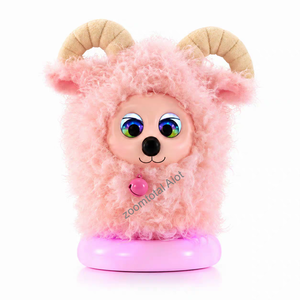
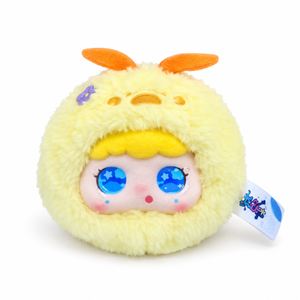
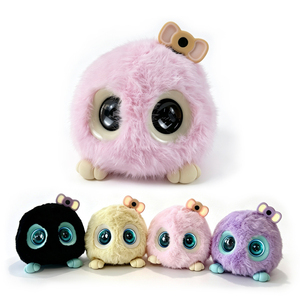
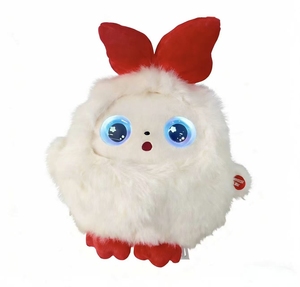
- Commercial AI Companion Pet Platforms: For consumer retail and eldercare markets, our integrated dual-screen and voice-interactive pet robots merge wide-angle optical vision with sentiment AI, creating interactive desk-bound avatars that cater to the surging emotional companion sector without requiring technical assembly.
Strategic B2B Procurement Trends: What Global Supply Chains Require
Procuring robotics hardware from China has evolved past basic unit-cost economics. Engineering procurement leaders and university supply officers now evaluate contracts based on ecosystem stability, hardware longevity, and regulatory compliance. Our internal data indicates three massive market developments transforming procurement agendas:
1. The Mandate for Open Hardware Interfaces: Proprietary firmware lock-in is increasingly rejected by academic and industrial procurement teams. Institutions demand open UART serial protocols, easily accessible GPIO headers, and clear pinout documentation. When buyers source our Petoi-compatible robotic platforms, they acquire hardware that interfaces effortlessly with ROS/ROS2, MicroPython, and MATLAB/Simulink workflows, protecting their educational curricula and research architectures from obsolescence.
2. Edge-Compute and Vision Convergence: Standard blind-gait locomotion is no longer sufficient. Supply chains increasingly seek quadruped systems that integrate integrated camera modules directly onto the chassis without structural redesign. Procuring platforms that accommodate onboard edge processors—such as ESP32-CAM or compact visual accelerators like the Kendryte K210—allows distributors to offer computer vision units (AprilTag recognition, human skeletal tracking, obstacle mapping) as scalable modular upsells.
3. Sustainable Modular Serviceability: In volume education deployments, physical damage from student experimentation is an operational certainty. Institutional buyers prioritize platforms that feature snap-fit, impact-resistant injection-molded polymers, readily available 3D-printable replacement CAD files, and standardized coreless servos that require minimal soldering to swap out during laboratory maintenance.
Future Technological Vectors: The Next Horizon in Agile Robotics
As robotic intelligence converges with physical hardware, our design labs and production pipelines in Shenzhen are driving breakthroughs along several key axes:
Reinforcement Learning Sim-to-Real Deployment: The future of gait generation is no longer hand-tuned kinematic equations. High-performance quadruped agility now originates inside physics engines like Isaac Gym or PyBullet. We are currently architecting low-latency serial firmware layers that allow developers to train neural network locomotor policies in simulation and compile directly onto our lightweight ESP32 actuators, enabling auto-balancing across unstable gravel, wet terrain, and unexpected physical perturbations.
Multi-Modal On-Device Generative AI: The next generation of companion and STEM robots will incorporate lightweight Vision-Language-Action (VLA) models. By combining microphone arrays, low-power NPU chips, and natural language interfaces, future quadrupeds will comprehend contextual multi-step voice prompts—such as "detect the blue container, walk over, and grasp it"—entirely offline, establishing a new tier of bio-mimetic autonomy.
Hardware Specifications Comparison Matrix
| Core Attribute | Bittle X Voice-Ready | Nybble Q Bionic Cat | Classic OpenCat Kit |
|---|---|---|---|
| Processing Board | BiBoard (High-Performance ESP32) | BiBoard (High-Performance ESP32) | NyBoard (ATmega328P Core) |
| Actuator Degrees of Freedom | 9 to 11 DOF (Legs + Neck + Gripper) | 11 DOF (Tail, Spine & Dual Joints) | 8 to 9 DOF |
| Integrated Sensors | 6-Axis IMU, Offline Voice Module | 6-Axis IMU, Ultrasonic & Infrared | 6-Axis IMU, Buzzer |
| High-Level SBC Support | Raspberry Pi 3A+/4B/Zero, Jetson Nano | Raspberry Pi Zero 2W, micro:bit | Raspberry Pi (via Serial Interface) |
| Supported SDK Frameworks | C++, Python, Mind+ (Block), ROS | C++, Python, Arduino IDE | Arduino C, Scratch |
Procurement Intelligence
Frequently Asked Purchasing & Engineering Questions
Clear, unvarnished insights into technical compatibility, minimum order quantities, manufacturing lead times, and global shipping protocols.
What specific hardware modules and external sensors are plug-and-play compatible?
Our platforms feature standardized 2.54mm pitch headers on the BiBoard and NyBoard controllers. Supported sensor expansions include I2C/SPI OLED displays, active buzzer units, gesture sensors (PAJ7620U2), infrared distance measuring arrays, touch-capacitive sensors, ultrasonic rangefinders, and edge AI vision cameras (such as MU Vision or ESP32-CAM). Robotic arm gripper extensions connect directly to auxiliary PWM servo pins with complete software library mappings provided out of the box.
How does the robotics controller board interface with Raspberry Pi or NVIDIA Jetson?
Communication occurs via high-speed serial UART over dedicated 5V, GND, TX, and RX header configurations or via standard USB-to-UART bridge connections. Compact boards like Raspberry Pi Zero 2W or 3A+ can be mechanically mounted atop the robot's spine. The host computer executes high-level computational tasks (SLAM, visual tracking, OpenCV, deep learning inference) and sends concise directional locomotion commands to the real-time controller, which handles inverse kinematics and closed-loop servo feedback.
What are the minimum order quantities (MOQ) and lead times for OEM/ODM private labeling?
For off-the-shelf standard models (Bittle X, Nybble, and AI pet series), MOQ begins at 50 units for institutional distributors. For OEM modifications—including custom injection colorways, branded silkscreen on PCBs, custom packaging sets, and pre-flashed proprietary firmware—our standard production run MOQ is 500 units. Prototype evaluation samples can typically be dispatched via international express within 5 to 7 business days, with volume mass manufacturing runs taking 25 to 35 calendar days.
Do your educational and research quadruped platforms comply with global certifications?
Yes. All exported robotic platforms and lithium-ion battery management systems (BMS) are rigorously tested and certified under CE (RED), FCC Part 15B, and RoHS standards. Battery packs feature independent UN38.3, MSDS, and drop-test certifications, ensuring uninterrupted customs clearance and regulatory compliance across North American, European, and Asia-Pacific educational import channels.
Are complete curriculum assets provided for secondary and university implementations?
Every educational order includes free access to our comprehensive STEM curriculum repositories. This encompasses step-by-step block-based coding slide decks for K-12 classrooms, complete C++ kinematics courses covering multi-joint coordinate systems, and documented Python APIs. Teachers and academic instructors receive detailed laboratory worksheets, sample exercises, and assessment matrices designed to meet standard national engineering education benchmarks.
Scale Your Robotics Hardware With an Industry Leader
Whether you require complete class sets for school districts, private-label commercialization, or high-volume wholesale distribution, our Shenzhen manufacturing facility provides turnkey scalability, certified precision, and dedicated engineering support.
Get a Quote