Precision Bionic Platforms & Embedded AI Robotics Lineup
Curated hardware solutions optimized for research institutes, mechatronics classrooms, and autonomous navigation pilots across the Chūkyō Metropolitan Area.

Engineering Excellence in Quadruped Locomotion: Why Petoi Bittle Serves Nagoya’s Tech Ecosystem
A technical overview of open-source bionic mechanics, real-time kinematics, and co-processor architectures built for high-demand research in Greater Nagoya.
The Chūkyō Industrial Region, anchored by Nagoya and surrounding prefectures including Aichi, Gifu, and Mie, forms the nerve center of Japanese mechanical engineering, automotive innovation, and precision mechatronics. As traditional industrial automation converges with edge-computing artificial intelligence, academic researchers, corporate innovation labs, and specialized vocational technical schools across Nagoya are transitioning from cumbersome wheeled chassis to agile, biomimetic quadrupedal systems. Within this demanding framework, our supply chain and export network delivers the world-renowned Petoi Bittle robotics framework directly to local procurement teams, offering unmatched fidelity, modularity, and control flexibility.
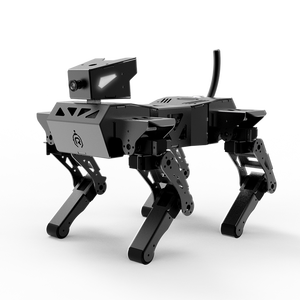
Petoi Bittle is an open-source, palm-sized bionic robot dog engineered around the robust OpenCat framework—the most widely starred and referenced quadruped project on GitHub. While conventional educational robot platforms are constrained by closed firmware, proprietary APIs, and rigid kinematic envelopes, Petoi Bittle features a deeply configurable architecture. Powered by the ESP32-based BiBoard and compatible with classic Arduino-based NyBoard designs, Bittle integrates 9 to 10 high-precision digital servos that dynamically calculate 3D inverse kinematics on-the-fly. This allows students and researchers in Nagoya’s leading university engineering departments—such as Nagoya University and Nagoya Institute of Technology—to execute advanced locomotion research without the capital-intensive barriers associated with heavy, enterprise-grade quadruped platforms.
Open Hardware Modularity
Features onboard ESP32/NyBoard logic boards with standard 2.54mm pin headers. Directly mount companion Single Board Computers (SBCs) like Raspberry Pi Zero, Pi 3A+, or NVIDIA Jetson Nano for heavy computer vision tasks.
Multi-Tier Software Stack
Flawlessly navigate across development environments: drag-and-drop block-based interfaces for younger STEM curricula, low-level real-time C++ routines for gait kinematics, and Python bindings for ROS integration.
Agile Bionic Gaits
Equipped with internal IMU (Inertial Measurement Unit) tracking dynamic roll, pitch, and acceleration. Automatically rebalances, recovers posture, and negotiates obstacles using biologically inspired movements.
Targeted Localization: Real-World Use Cases in Nagoya & Chūkyō
Bridging theoretical computation and industrial reality across Japan's leading technological corridor.
Higher Education Mechatronics Labs
Academic institutions throughout Aichi Prefecture deploy Petoi Bittle as the standard platform for inverse kinematics (IK) teaching, trajectory generation, and sensor fusion lab courses. Rather than simulating in Gazebo alone, graduate and undergraduate students validate control loops on real-world silicon.
Automotive & Manufacturing R&D
Greater Nagoya serves as Japan's tier-one automotive proving ground. Corporate innovation departments utilize Bittle as a micro-testing bed for edge-AI sensor placement, LiDAR slam calibration, and miniaturized automated inspection algorithms intended for factory flooring and confined industrial conduits.
Advanced STEAM & Coding Academies
As Japan continues its national initiative to modernize computing education under MEXT guidelines, specialized coding centers and progressive high schools in Nagoya adopt Bittle to teach physical computing. Students transition seamlessly from visual block drag-and-drop algorithms to production-grade C++ and Python.
Autonomous Systems Evolution: Industry Trends Shaping Central Japan
Why scalable bionic quadrupeds represent the decisive inflection point in Japan's Industry 5.0 trajectory.
The manufacturing landscape across Nagoya, Toyota City, and Kariya is experiencing a historic transformation. Long dominated by traditional industrial robotic arms and fixed assembly automation, modern Japanese industry is facing dual pressures: an aging demographic curve and the urgent imperative for flexible, autonomous manufacturing environments. As a result, the Aichi Prefectural Government and prominent regional consortia are directing aggressive capital allocations toward intelligent robotics, unmanned aerial/ground vehicles (UAVs/UGVs), and real-time artificial intelligence edge deployment.
Within this emerging paradigm, legged locomotion platforms are experiencing exponential interest compared to traditional wheeled Automated Guided Vehicles (AGVs). Industrial facilities, logistics hubs, and energy substations contain multi-level steps, grating, irregular flooring, and narrow maintenance pathways that obstruct wheeled platforms. By leveraging bionic quadruped architectures, engineers can conduct autonomous visual inspections, acoustic monitoring, and telemetry collection across complex terrains. Petoi Bittle acts as the ideal micro-scale proving testbed: offering the identical dynamic stability challenges and ROS communication nodes as massive industrial quadrupeds, but at an accessible cost structure that enables mass parallel testing across distributed engineering teams.
Enterprise Strengths: Why Nagoya Procures Direct From Our Channel
Backed by Shenzhen Pbrobot Technology’s proven manufacturing infrastructure, verified IP, and streamlined global fulfillment.
Original OpenCat Lineage
Direct supply straight from the developmental vanguard of the OpenCat framework. Our hardware features factory-calibrated core servos, durable high-impact ABS injection-molded chassis, and rigorously tested printed circuit assemblies designed for continuous operation.
Optimized Japan-Direct Logistics
Located directly in the Shenzhen supply hardware capital, our export division offers rapid direct dispatch to Chūbu Centrair International Airport (NGO) and the Port of Nagoya. Expedited customs processing, export documentation compliance, and express transit options ensure fast lab deployment.
Comprehensive Curricula & Dev Assets
We supply turnkey educational frameworks alongside physical hardware. Access complete bilingual documentation, Scratch-based visual lesson modules, C++ gait code libraries, and open Python REST API bindings without costly recurring software subscriptions.
Nagoya Procurement & Technical Implementation FAQ
Clear, direct answers addressing import regulations, compliance standards, curriculum integration, and institutional volume quotes.
Q: How do Nagoya institutions handle technical compliance (TELEC / PSE) for wireless components?
Our export models equipped with Bluetooth/Wi-Fi microcontrollers (such as the ESP32 BiBoard) utilize internationally certified chipsets. For specialized university or enterprise projects needing custom RF evaluation, we provide full technical datasheets and USB-wired firmware configurations to align precisely with Japanese Radio Act regulations and laboratory requirements.
Q: Can the Bittle robot dog be mounted with an external robotic arm or vision sensor?
Yes. The Bittle framework is intentionally engineered for modular physical expansions. It accommodates our proprietary robotic arm gripper extension, standard ultrasonic sensors, and external AI vision modules. Furthermore, mounting holes on the top frame allow lightweight SBCs like Raspberry Pi 3A+ or Pi Zero to communicate via serial UART headers.
Q: What is the typical lead time and shipping route for deliveries to Aichi Prefecture?
Standard express air shipments from our export facility to central Nagoya address hubs typically transit within 3 to 6 business days via DHL, FedEx, or standard international air carriers. Bulk classroom orders (50+ units) or specialized institutional shipments are tracked end-to-end with clear commercial invoices and Japanese customs clearing codes.
Q: What programming environments are native to the Petoi Bittle platform?
Bittle is fully multi-lingual in software execution. Beginners use Petoi Coding Blocks (Scratch-based visual environment). Intermediate students control movements via the Petoi Mobile/Desktop App and Skill Composer. Advanced mechatronic developers and university researchers program in embedded C++ via Arduino IDE or execute real-time control scripts via Python and ROS.
Q: Do you provide educational volume discounts for universities and public schools?
Yes. We offer tiered bulk pricing structures for academic institutions, vocational technical colleges, robotics camps, and authorized commercial distributors across Japan. Our Educator Purchase Guide assists school procurement officers in planning class kit counts, spare servo packs, and curriculum deployments.
Q: What after-sales warranty and component replacement support is available?
All units exported to Japan carry manufacturer warranty protection against component defects. Because physical robotics inherently incur physical wear during high-level gait experimentation, we maintain individual stock of digital replacement servos, linkage parts, Li-ion battery packs, and mainboards ready for swift spare dispatch.
Ready to Integrate Petoi Bittle into Your Nagoya Lab or Curriculum?
Request technical specifications, bulk institutional pricing, and localized delivery timelines from our global export team today. Accelerate your quadruped mechatronics program with industry-leading open hardware.
Get Catalog