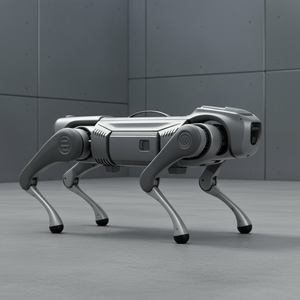
Factory Direct Selection
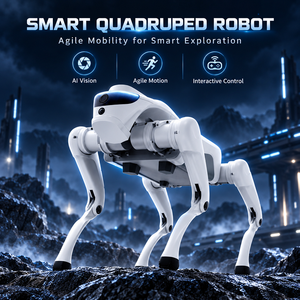
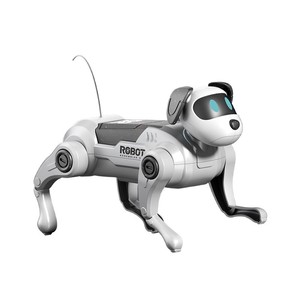
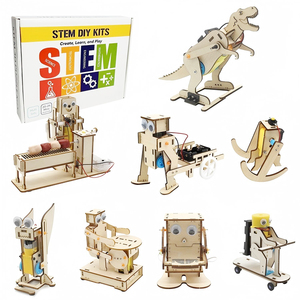
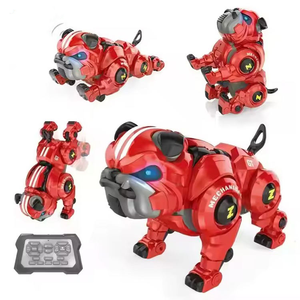
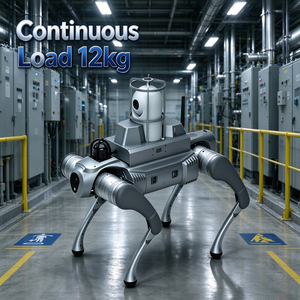
Bionic Quadruped & STEM Robotics Available for Wholesale Dispatch
Explore production-grade programmable quadrupeds, modular robotics kits, and industrial testing platforms verified for compatibility with OpenCat firmware standards and cross-architecture sensory integrations.


Engineering Documentation
Petoi Bittle Firmware Architecture, Flashing Protocols, and EEPROM Calibration
A rigorous industrial perspective on flashing, maintaining, and upgrading OpenCat-driven quadruped bionic platforms across institutional clusters and distribution inventories in the Philippines.
1. Hardware Abstraction Layers: NyBoard vs. BiBoard (ESP32)
Operating and maintaining fleets of Petoi Bittle quadrupeds requires a granular understanding of the microcontroller hardware powering the gait engines. In educational institutions and robotics workshops across Metro Manila, Cebu, and Davao, hardware deployments typically bifurcate into two architectures:
- NyBoard (ATmega328P with PCA9685 PWM Driver): Found in legacy and entry-tier educational editions. The firmware pipeline leverages the Arduino IDE or Petoi Desktop App via a CH340 or CP2102 USB-to-UART bridge. Memory allocation is exceptionally tight; program storage space sits at 32KB, demanding optimized compilation flags and manual EEPROM allocation tables for joint angle offsets.
- BiBoard (ESP32 Dual-Core Xtensa LX6): Powering the flagship Bittle X and high-level bionic research platforms. It introduces onboard 2.4 GHz Wi-Fi and Bluetooth 4.2 BR/EDR & BLE, executing real-time inverse kinematics (IK) computations on Core 0 while reserving Core 1 for sensory fusion, voice synthesis, and communication stacks.
When executing a firmware update across enterprise batches, distinguishing board revisions (e.g., NyBoard V1_0, V1_1, BiBoard V0_1, BiBoard V1_0) is paramount. Flashing an incompatible binary can result in misaligned I2C register addresses for the onboard 6-axis MPU6050/ICM-42670-P IMU, leading to kinematic lockups or uncalibrated servo flutter.
2. Systematic Step-by-Step Firmware Flashing Procedure
For factory engineers, system integrators, and university lab technicians, relying on automated cloud tools can introduce latency or package drops in regions experiencing variable international bandwidth. We mandate the following localized industrial standard operating procedure (SOP):
- Preparation & Isolation: Disconnect the 2S 7.4V Li-ion battery pack from the mainboard DC bus. Flashing must proceed under regulated USB 5V VBUS power to prevent involuntary servo actuation during bootloader overwrites.
- Repository Clamping: Clone the validated release tags from the official OpenCat repository. Ensure the configuration header (
OpenCat.h) is adjusted: uncomment#define BITTLE(or your specific model) and select the corresponding board version macro. - Driver Stack Resolution: On Windows and macOS workstations, verify FTDI / CH340 / CP210x serial driver parity. In high-density computer labs common in Philippine polytechnic colleges, establish fixed COM port rules via device management scripts.
- Stage 1: Flashing the Write-EEPROM Script: Compile and upload the calibration routine. This clears lingering offset tables, writes the default center positions (standard 90-degree servo spline orientation), and defines the coordinate transforms required for bipedal and quadrupedal motion vectors.
- Stage 2: Main Kinematic Engine Deployment: Upload the primary operational payload (
OpenCat.ino). Open the Serial Monitor at 115200 baud to ensure the boot check reports clean I2C sensor detection (IMU, optional OLED, ultrasonic rangers, and gesture cameras).
3. Joint Angle Posture Calibration & Servo Protection
Following a firmware update, every quadruped requires zero-point alignment. In high-humidity tropical environments such as the Philippines, mechanical tolerances and nylon/metal servo gears can shift over extensive seasonal duty cycles.
Utilize the Petoi Joint Calibrator tool or direct serial commands (m, c, k). Servos must sit cleanly perpendicular to the chassis linkages. Neglecting this physical-to-digital parity causes high continuous stall currents (exceeding 1.8A per channel on P1S coreless servos), inducing thermal throttling in the onboard low-dropout (LDO) regulators and degrading battery life significantly.
Deterministic Low-Latency Gaits
Dynamic movement profiles (trot, crawl, walk, backflip) are computed utilizing deterministic finite-state machines, ensuring stable center-of-mass trajectory control across challenging terrains.
ROS & Python Edge Integration
Firmware exposes robust serial UART packet protocols (ASCII and binary mode), allowing seamless plug-and-play linkage with Raspberry Pi 4B/5 and NVIDIA Jetson Nano running ROS2 nodes.
OTA Wireless Maintenance
BiBoard-equipped units support Over-The-Air (OTA) updates via localized Wi-Fi access points, allowing entire lab clusters of 40+ units to be flashed simultaneously without individual tethering.
Market Intelligence
Localized Adoption Scenarios & Robotics Growth Trends in the Philippines
Analyzing how quadruped bionic systems and embedded AI platforms are transforming educational curricula, technical skills training, and industrial surveillance nationwide.
DOST & DepEd Curriculum Modernization
The Philippine Department of Science and Technology (DOST) and progressive high schools are systematically pivoting from stationary robotic arms to legged mobility platforms. Petoi Bittle bridges foundational block programming (Scratch) with industrial C++ firmware compilation, directly targeting national STEM competitive benchmarks.
Tertiary Mechatronics & Thesis Research
Leading engineering faculties in the University of the Philippines (UP), De La Salle University (DLSU), and Mapúa University utilize the OpenCat architecture to test autonomous navigation algorithms, SLAM LiDAR mapping, and reinforcement learning models without the prohibitive CAPEX of enterprise-grade quadrupeds.
Agri-Tech & Confined Subsurface Inspection
Across regional agricultural cooperatives in Mindanao and maritime logistics warehousing in Batangas and Subic Bay, custom-shelled quadrupeds running updated firmware are leveraged to traverse uneven, non-planar terrain, verifying environmental sensors under extreme thermal and humidity variations.
Factory Supply Chain Strengths
Why Institutional Buyers & Philippine Resellers Partner With Us
Direct-from-factory manufacturing capacities, rigorous quality control regimes, and comprehensive fulfillment infrastructure tailored for ASEAN distribution.
100%
Pre-Flash Firmware QA
48-72h
PH Air Freight Dispatch
OEM/ODM
Custom Bios & Shell Injection
DDP / L/C
Flexible Import Settlement
Full Lifecycle Wholesale & Factory Engineering Support
As a specialized manufacturer and tier-1 supplier of open-source quadruped platforms, our production operations bridge the gap between open-source maker communities and enterprise-grade reliability:
- Factory Pre-Configuration: Every wholesale lot bound for the Philippines undergoes custom automated firmware provisioning. We burn the latest stable branch of OpenCat with pre-calibrated zero-point offsets written straight into EEPROM, mitigating out-of-the-box assembly defects and minimizing support overhead for local distributors.
- Customized Sensor & Shell Modularity: We offer custom tooling, anti-corrosive conformal coatings for electronics subjected to humid maritime air, and tailored structural brackets designed for LiDAR, RealSense depth cameras, or robotic gripper arms.
- Compliant Supply Chain Logistics: We handle complete export documentation, Philippine Bureau of Customs compliance assistance, tariff classifications, and localized packaging formats (SKD - Semi Knocked Down or pre-assembled CBU units) tailored to reduce institutional freight costs.
Purchasing & Technical Inquiries
Frequently Asked Questions for Philippine Importers & Procurement Teams
Clear, direct answers regarding bulk importing, customs clearance, warranty handling, firmware updating services, and curriculum licensing.
Q How do we resolve bricked controllers following an interrupted firmware update?
If a brownout or disconnected cable corrupts the bootloader, the microcontroller can be recovered using ISP flashing protocols via an external USBasp or ESP-Prog programmer. Our engineering team provides direct binary dumps and flashing scripts that bypass the corrupt standard serial bootloader.
Q What lead times can schools and wholesalers expect for deliveries into Manila or Cebu?
Standard wholesale orders (50 to 500 units) are manufactured and pre-flashed within 7 to 12 working days. Air express courier transit directly to Ninoy Aquino International Airport (NAIA) or Mactan-Cebu International Airport typically takes 3 to 5 business days, with full DDP (Delivered Duty Paid) documentation available.
Q Can we order kits pre-flashed with custom secondary development routines?
Yes. As an OEM factory, we can burn your custom gait sequences, specific sensor configurations (such as I2C ultrasonic or IR transceivers), or university lab identifiers directly into the ROM prior to batch sealing, saving your lab staff hundreds of hours of manual configuration.
Q What warranty and spare component options are provided for regional distributors?
We supply replacement joint servos, mainboards, lithium battery modules, and chassis structural pieces with dedicated distributor buffer margins (typically 2-3% spare modules included with volume shipments), backed by our standard 12-month factory electronic warranty.
Q Are educational curricula and development software free to distribute in the Philippines?
Yes. The foundational block-based coding, C++ kinematics, and Python robotics curriculum are open and free to adapt. Academic institutions across the Philippines have unrestricted rights to translate, contextualize, and incorporate these modules into their departmental courses.
Q How does the platform withstand tropical humidity and ambient heat?
Our industrial production runs can incorporate protective conformal coatings across the PCB surface to shield delicate traces from oxidation and conductive atmospheric moisture, making them ideally resilient for long-term use across humid Southeast Asian facilities.
Ready to Scale Your Robotics Program or Wholesale Inventory?
Connect with our technical engineering group and international sales directors to discuss volume quotation brackets, customized firmware payloads, and fast direct shipping pipelines to the Philippines.
Inquire Now