STEM Primary Education
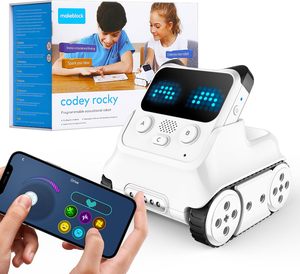
Makeblock Codey Rocky Interactive Emo Robot Coding for Kids STEM Support Scratch Python
Scratch 3.0
Python
IoT & AI
Pre-inspected, bulk-ready programmable systems optimized for secondary schools, TVET institutions, tertiary universities, and distributor networks across Peninsular and East Malaysia.

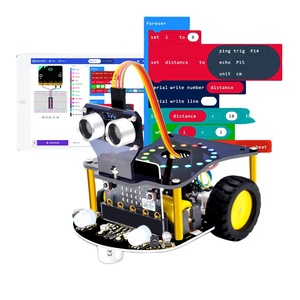
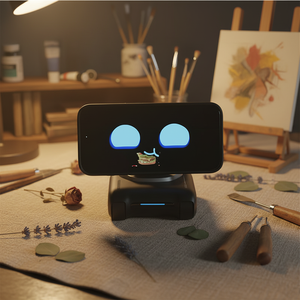
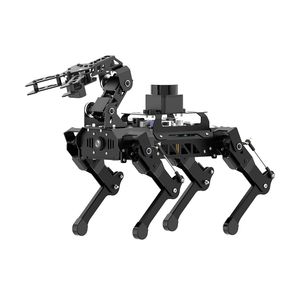
How system architects and academic labs in Malaysia implement real-time locomotion control alongside heavy machine vision models using dual-processor orchestration.
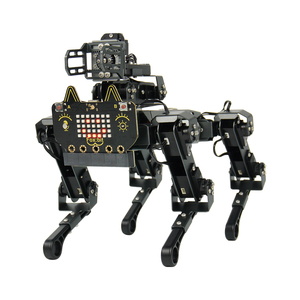
The core computational bottleneck of small-scale quadruped robotics lies in balancing sub-millisecond servo loop updates with demanding edge inference tasks. Standard microcontrollers running the OpenCat framework (such as Petoi's specialized NyBoard or BiBoard ESP32) excel at inverse kinematics, proportional-integral-derivative (PID) stabilization loops, and 16-channel PWM pulse generation. However, when university research teams and advanced makers in Malaysia introduce high-bandwidth sensors—such as MIPI CSI cameras, LIDAR, and neural network accelerators—the onboard microcontroller quickly exhausts both RAM and compute bandwidth.
By mounting a Single Board Computer (SBC)—predominantly the Raspberry Pi 4B, 3A+, or the ultra-compact Raspberry Pi Zero 2 W—the Petoi Bittle transforms from an autonomous servo runner into a high-tier biomimetic research node. The Raspberry Pi assumes responsibility for environment mapping, SLAM (Simultaneous Localization and Mapping), gesture comprehension via MediaPipe, and speech synthesis, while offloading strict balance control and torque compliance to the BiBoard controller over low-latency UART serial communications.
Direct coupling of a 5V 3A Raspberry Pi with a dynamic servo battery rail represents the primary failure mode observed during initial student builds. Quadruped locomotion generates significant back-EMF spikes when metal-gear digital servos correct for sudden surface irregularities. In professional B2B export kits supplied across Malaysia, our power delivery topology incorporates a synchronized DC-DC switching regulator providing clean 5.1V rail power with high-capacity low-ESR solid capacitor filtering. This ensures that even under maximum payload carrying capacity (e.g., Pi camera module, breadboards, distance sensors), the Raspberry Pi logic core remains immune to voltage dips.
Communication utilizes the standard 2.54mm header array on Petoi's OpenCat architecture. The TX/RX line connects directly through hardware UART (dev/ttyS0 or ttyAMA0 on Raspbian OS), bypassing the USB-to-UART bridging latency. With this configuration, Python control scripts execute commands using structured binary byte arrays, cutting communication latency from 45ms down to less than 2ms. This responsiveness is vital for terrain-reactive adjustments when operating across unpaved environments.
| Architecture Feature | Standalone Petoi Bittle X | Bittle + Raspberry Pi Zero 2 W | Bittle + Raspberry Pi 4B (ROS Stack) |
|---|---|---|---|
| Primary Compute Unit | ESP32 Dual-Core 240MHz | Broadcom BCM2710A1 Quad-Core 1GHz | Broadcom BCM2711 Quad-Core 1.5GHz |
| System Memory (RAM) | 520 KB SRAM + 4MB Flash | 512MB LPDDR2 | 2GB / 4GB / 8GB LPDDR4 |
| Operating Environment | FreeRTOS / Bare-Metal C++ | Raspberry Pi OS Lite (Linux) | Ubuntu Server 20.04 / 22.04 LTS (ROS2) |
| Vision & Perception | SPI Add-on Camera (Basic Tracking) | MIPI CSI Camera (Color, Tag, Face) | Wide-Angle HD / Dual Stereo Camera / RPLIDAR |
| Kinematics Control Mode | Onboard Inverse Kinematics Engine | Python API Over Serial UART | ROS / ROS2 micro-XRCE-DDS Nodes |
| Ideal Malaysian Institutional Use | Secondary Schools & MDEC Coding Labs | Polytechnics & Diploma TVET Curricula | Post-Graduate AI Research Labs (UTM, UM, USM) |
Aligning with national technological mandates—from the Malaysia National 4IR Policy to university incubation labs in the Klang Valley, Penang, and Johor.
Malaysian tertiary powerhouses—including Universiti Teknologi Malaysia (UTM), Universiti Malaya (UM), and Universiti Sains Malaysia (USM)—deploy Petoi Bittle Raspberry Pi clusters to instruct undergraduate mechatronics students in dynamic balancing, forward/inverse kinematic modeling, and distributed Linux robotic frameworks without incurring five-figure lab hardware costs.
Under the Malaysia Digital Economy Corporation (MDEC) framework, secondary schools across Selangor, Kuala Lumpur, and Penang leverage block-to-Python transitions. Petoi's physical walking response demystifies programming logic for young learners far more intuitively than static screen software or wheeled toy cars.
Oil & gas and agricultural tech incubation centers in Johor and East Malaysia (Sabah and Sarawak) utilize Bittle + Pi assemblies as desktop simulation platforms for pipeline leak detection, gas sniff testing, and rough-terrain agricultural reconnaissance prior to staging field deployments with expensive multi-thousand-dollar robots.
Leading private coding franchises and independent robotic educational suppliers across Petaling Jaya, Subang Jaya, and George Town stock wholesale sets of Bittle kits. High unit margins and modular expansion options provide steady recurring sales via semester-based robotic competitions and hackathons.
Government-Linked Companies (GLCs) and regional innovation grants (such as Cradle Fund and MOSTI initiatives) regularly commission localized STEM outreach kits. Petoi's completely transparent open-source codebase eliminates proprietary software licensing costs, satisfying statutory procurement criteria.
Preparation centers for major Malaysian robotic competitions adopt Petoi Bittle as the standard platform for agile bionic walking challenges. Custom dynamic trajectories can be pre-simulated in Python and flashed directly to robot fleets in minutes.
Understanding the confluence of government policy, industrial automation demands, and curriculum modernizations steering procurement over the next five years.
Malaysia's Ministry of Investment, Trade and Industry (MITI) has continually emphasized technological self-reliance under Industry4WRD. As traditional assembly lines across the northern tech corridor in Penang transition into smart manufacturing hubs, technical institutes face mounting pressure to produce graduates proficient not merely in static PLC programming, but in dynamic kinematics, edge visual intelligence, and cyber-physical systems. The Petoi Bittle, paired with Raspberry Pi computing, provides an affordable, deployable platform that matches TVET operational budgets while delivering real-world embedded Linux and micro-ROS competencies.
For more than a decade, institutional robotics curricula in Southeast Asia remained dominated by two-wheeled differential drive chassis and four-wheeled Mecanum car platforms. While effective for simple obstacle avoidance, these designs fail to instruct students on dynamic stability, center-of-mass trajectory planning, and joint load distributions. Across Malaysian universities, academic publications regarding quadruped kinematics have increased more than 280% since 2021. Institutions are shifting procurement budgets toward legged platforms, positioning Petoi Bittle as the leading cost-to-performance vehicle for laboratory workbenches.
Traditional Malaysian procurement previously relied on domestic third-party hobby shops that applied steep markups (frequently exceeding 60-80% over standard factory prices) while providing minimal technical consultation or direct firmware-level support. Institutional procurement teams, polytechnic purchasing consortiums, and national STEM suppliers are now bypassing intermediary trading channels, opting for verified direct factory exporters capable of providing DDP (Delivered Duty Paid) shipping to Port Klang, customized batch flashing, localized spare parts inventory, and structured OEM/ODM hardware customization.
Backed by Shenzhen Pbrobot Technology Co., Ltd. and the original Petoi open-source ecosystem, we provide institutional stability, direct engineering assistance, and rapid logistics execution.
We are the direct manufacturers and engineering originators behind the OpenCat robotics framework. Every Bittle X and Nybble Q unit shipped to Malaysia undergoes strict multi-point factory QA, including servo load calibration, IMU drift verification, and wireless transceivers diagnostic tests.
We provide full customs clearance and import tax pre-handling via trusted freight channels. Shipments arrive directly at your university department, warehouse, or retail distribution hub in Kuala Lumpur, Johor, Penang, or East Malaysia within 5–8 business days via express air, or 12–16 days via ocean freight.
Institutional bulk orders include full access to teacher lesson guides, step-by-step assembly slides, block-based coding exercise modules, and advanced C++/Python laboratory manuals, drastically reducing the syllabus preparation time for Malaysian instructors.
Avoid extended project delays caused by damaged gear trains or worn components. We supply institutional partners with spare parts packages—including high-torque digital coreless servos, structural chassis plates, and Li-ion battery arrays—ensuring uninterrupted classroom operations.
Gain direct technical communication with our core firmware developers and hardware design team. When troubleshooting customized Raspberry Pi kernel builds, camera pipeline latency, or UART bridge configurations, your team receives authoritative support without intermediary delays.
We work closely with certified local Malaysian vendors, e-Perolehan suppliers, and distributor partners to deliver formal proforma invoices, Certificate of Origin (COO), HS-Code classifications, and required technical bid compliance documentation.
Clear, direct answers regarding customs clearances, SIRIM regulations, payment methods, delivery lead times, and institutional volume purchase tiers.
Connect directly with our international export division. Request wholesale tier pricing, discuss custom syllabus alignment, or arrange an evaluation sample package for your academic department or retail distribution network.