Explore core quadruped bionic components, intelligent vision sorting systems, and collaborative STEM robotics engineered with modular sensor buses for rapid enterprise and educational deployment.
An authoritative engineering breakdown of electrical interfacing, bus arbitration, low-latency telemetry pipelines, and kinematics coordination across the OpenCat robotics ecosystem.
The operational agility of palm-sized quadruped robots like the Petoi Bittle and Bittle X depends on two distinct layers of sensory perception: proprioceptive internal feedback and exteroceptive environmental telemetry. B2B procurement directors and institutional researchers must assess how these multi-sensor streams interface with the core microcontroller.
Equipped with intelligent camera modules (such as ESP32-CAM, HuskyLens, or Mu Vision), this pack allows real-time optical face tracking, color block classification, line following, and AprilTag localization directly over UART/I2C at 30+ frames per second.
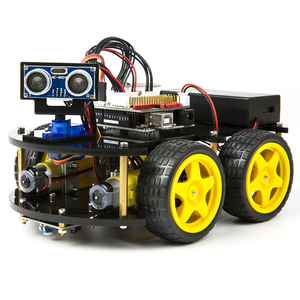
Combining ultrasonic distance sensors and infrared obstacle detection with compact ToF (VL53L0X/VL53L1X) laser sensors. Provides 3D point proximity data to compute continuous avoidance vectors for Bittle's autonomous gait state-machine.
Integrates capacitive touch sensors for surface interaction response and custom acoustic recognition modules programmed with customizable lexical triggers. Enables instant response to physical touch and voice commands without cloud tethering.
Comprehensive technical specifications designed for university laboratory buyers, curriculum coordinators, and bulk hardware distributors.
| Module Category | Communication Protocol | Operating Voltage | Peak Current (mA) | Data Refresh Frequency | MCU Host Compatibility |
|---|---|---|---|---|---|
| AI Optical Vision Sensor Pack | UART (115200 - 921600 bps) / I2C | 3.3V - 5.0V DC | 160 mA | 30 - 60 FPS | ESP32 BiBoard, Raspberry Pi 4/5, Jetson Nano |
| ToF Laser Ranging Sensor Module | I2C Fast Mode (400 kHz) | 2.8V - 5.0V DC | 20 mA | 50 Hz | BiBoard, NyBoard (Arduino ATMega328P) |
| Neural Speech Recognition DSP | UART / I2C Bus | 3.3V DC | 45 mA | < 100 ms recognition | BiBoard, Arduino Uno/Mega, micro:bit |
| 6-DOF/9-DOF IMU Balance Pack | I2C (Address: 0x68 / 0x69) | 3.3V DC Native | 3.8 mA | 1000 Hz Internal / 200 Hz Output | Native On-Board NyBoard & BiBoard |
| Ultrasonic Proximity & RGB Matrix | Digital GPIO Trigger + Echo / Single-Wire | 5.0V DC | 65 mA (with LED arrays) | 40 Hz Pulse Ranging | All OpenCat & Arduino Standard Headers |
| Robotic Arm Gripper Tactile Pack | Analog ADC / PWM Feedback | 4.8V - 6.0V (Servo Rail) | 450 mA (Stall Force) | Real-time Loop | BiBoard PWM Channels (Ch 12-15) |
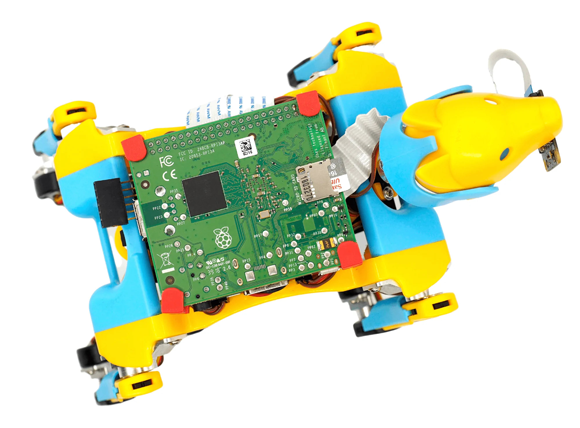
For research labs bridging the gap between educational robotics and enterprise AI SLAM navigation, the Petoi Bittle platform serves as an open kinematics chassis. Compact single-board computers like the Raspberry Pi Zero 2W or Raspberry Pi 3A+ mount directly over the upper chassis plate.
Telemetry pipelines pass through high-speed serial UART lines, enabling developers to run ROS 2 (Robot Operating System) nodes on the SBC while delegating real-time joint-servo interpolation to the BiBoard. This hierarchical architecture eliminates hardware bottlenecks and allows effortless drop-in upgrades of sensor suites as experimental needs evolve.
Key technological, regulatory, and supply chain shifts that global wholesalers, school district buyers, and university robotics labs must prepare for over the next five years.
Future sensor pack sourcing is rapidly transitioning from discrete threshold sensors to unified on-device NPU coprocessors capable of executing quantized multimodal models. Next-gen Bittle sensor packs will process simultaneous visual, audio, and spatial inputs directly on edge silicons, enabling zero-latency decision trees without reliance on remote cloud infrastructure.
Institutional buyers are moving away from loose jumper wires that lead to short-circuits in classrooms. Sourcing demands now heavily favor keyed, polarized click-in connectors (such as Qwiic, STEMMA QT, and Grove-compatible 2.54mm locking pinheaders) that deliver both 3.3V/5V DC and I2C/UART lines securely, decreasing classroom troubleshooting time by over 70%.
Cross-border procurement faces tightening scrutiny. Sourcing contracts for wholesale educational and robotics hardware require exhaustive CE, FCC Part 15 Class B, RoHS 2.0 (Directive 2011/65/EU), and REACH certification. Wholesalers must partner with direct Shenzhen manufacturers maintaining certified SMT facilities capable of providing verifiable test documentation.
Universities are adopting sensor packs designed specifically to match digital twin simulation environments (e.g., NVIDIA Isaac Sim, MuJoCo, and Gazebo). Accurate synthetic noise models for IMUs and ToF ranging modules allow code trained in high-speed GPU simulations to be loaded directly onto Petoi hardware with minimal kinematic reality-gap degradation.
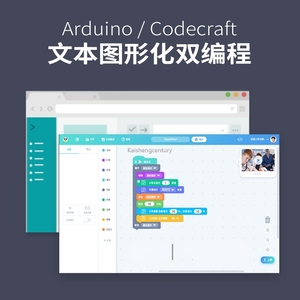
Hardware without structured pedagogical documentation is losing commercial traction. Top school districts and vocational colleges prioritize sensor pack distributors who provide turnkey, standards-aligned (CSTA, NGSS) curricula spanning graphical block-based programming (Scratch/Mind+) through embedded C++ and ROS 2 Python scripting.
Procurement departments are bypassing fragmented trading intermediaries in favor of vertically integrated manufacturers located in Shenzhen. Direct access to PCB fabrication, automated optical inspection (AOI), injection molding, and factory-level firmware flashing reduces lead times from 12 weeks to under 15 business days for custom bulk revisions.
Combining world-class OpenCat intellectual property with the manufacturing velocity and precision quality control of China's premier hardware hub.
As the primary engineering authority and wholesale exporter behind Petoi open-source bionic hardware, Shenzhen Pbrobot Technology Co., Ltd. provides international partners with unmatched technical depth, price stability, and end-to-end quality assurance.
Every sensor pack and servo driver board undergoes extended burn-in testing under thermal load and simulated vibration cycles to replicate real-world multi-hour classroom use and research stress testing.
We supply partners with complete open-source software libraries in C++, Python, and Scratch, accompanied by step-by-step documentation, wiring diagrams, and classroom challenge worksheets.
We provide exclusive market territories, rebate structures, competitive tier margins, and co-branded marketing collateral for qualified regional robotics wholesalers and educational tender contractors.
Direct answers to technical compatibility, volume order minimums, international regulatory standards, and warranty policies.
The standard Petoi Bittle Sensor Pack comprises an optical distance sensor (Ultrasonic and/or ToF laser ranging module), an intelligent AI camera vision module for AprilTag and object tracking, a dual-axis analog gesture sensor, a voice command recognition module, an ambient light/sound sensor module, and a capacitive touch array. Extension modules connect via standard 2.54mm pitch headers on the BiBoard/NyBoard.
Sensor communications utilize dedicated hardware I2C bus lines (standard speed 100 kHz or fast mode 400 kHz) and high-speed UART serial interfaces. The BiBoard features dedicated 4-pin grove-style headers with regulated 5V and 3.3V power rails, allowing daisy-chaining of compatible I2C peripherals without signal bus collision.
Yes. Compact single-board computers (such as Raspberry Pi Zero 2W or 3A+) mount directly to the chassis and interface via UART serial pins using open-source Python libraries. Heavy computational vision processing is handled on the SBC while motor kinematics and low-level sensor loops remain on the BiBoard. For Jetson Nano, wireless Wi-Fi/Bluetooth socket telemetry is recommended due to weight constraints.
For standard off-the-shelf sensor packs and robot kits, sample evaluations require an MOQ of just 1 to 5 units. For bulk institutional wholesale orders, standard tiered discounts start at 20 units. Custom OEM packaging, customized silkscreen branding, and specialized firmware flashes require an MOQ of 200 units with typical factory lead times of 15 to 25 business days.
All exported Petoi robotics components, sensor assemblies, and lithium battery management circuits comply fully with CE (EN 61000-6-1, EN 61000-6-3), FCC Part 15 Subpart B, RoHS 2.0 (Directive 2011/65/EU), and REACH standards. Complete test lab documentation, Declarations of Conformity (DoC), and MSDS/UN38.3 battery transport certificates are provided with every commercial invoice.
Yes. We supply free, fully documented curricula covering both graphical block-based programming (ideal for elementary and middle school K-12 STEM programs) and standard C++/Python APIs for high schools and universities. Sample code covers obstacle avoidance routines, line following, AprilTag navigation, and custom gait compositions via Petoi Skill Composer.
We provide an official 12-month factory hardware warranty covering manufacturing defects across all controller boards, sensor modules, and structural chassis components. For institutional orders, we provide a 1.5% free-of-charge spare parts buffer (including extra servos, sensor cables, and connectors) directly in the export shipment to resolve classroom wear-and-tear immediately.
Contact our wholesale procurement department via the live chat gateway below. Provide your target destination country, required unit volume, desired custom configuration, and delivery timeframe to receive a formal proforma invoice with freight calculations within 24 hours.