Featured Actuation Assemblies & Robotics Hardware Systems
Engineered for high-frequency articulation, precision kinematics, and rapid integration across STEM education, companion pets, and industrial robotics platforms.
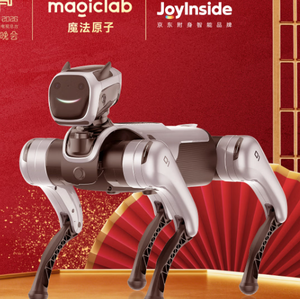




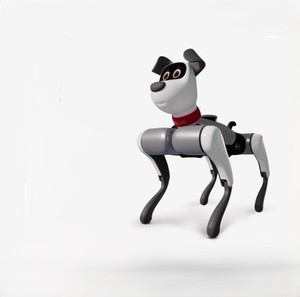

The Architecture of Legged Robotics: Micro-Actuation in Petoi Bittle Platforms
The rapid maturation of open-source bionic quadrupeds—heralded by frameworks like Petoi Bittle, Nybble, and the underlying OpenCat architecture—has triggered an evolution in the supply chain for miniature servomotors. In quadruped locomotion, servos are no longer passive hobby components; they function as closed-loop dynamic joints requiring precise torque output, instant thermal dissipation, minimal gear backlash, and low mechanical impedance. Sourcing high-performance actuator modules from verified China manufacturing clusters is now the definitive operational strategy for Tier-1 robotics brands, university laboratories, and educational system integrators worldwide.
Standard 9g hobby servos frequently fail within hours under dynamic legged conditions due to plastic gear stripping, thermal runaway on driver chips, and deadband drift. When engineering or wholesale sourcing actuators for Petoi Bittle compatible robots, procurement directors must evaluate internal motor topology, gear train metallurgy, potentiometer vs. magnetic encoder longevity, and real-time serial bus protocol compatibility. As an authoritative hardware supply chain partner, we bridge the gap between silicon-level motion microcontrollers, precision metal machining, and finished bionic robot assemblies.
Full Metal Geartrains
Sintered bronze, aluminum alloy, and steel-titanium hybrid gearing engineered to absorb drop impacts and sustain up to 3.5 kg·cm dynamic impact loads without tooth shearing.
Coreless & Brushless Motors
Ultra-low rotational inertia rotors yielding step response latency under 0.07 sec/60°. High-efficiency field coils minimize power drain across 2S lithium battery banks.
Dual Ball Bearing Hubs
Radial load stabilization on output splines completely mitigates axis wobbling, ensuring smooth trot-gait transitions and extended structural chassis integrity.
Future Procurement Trends: Actuation in Bionic Hardware (2025–2030)
Strategic hardware indicators transforming wholesale purchasing paradigms for quadruped component integrators.
The global robotics component ecosystem is undergoing a generational shift. Procurement departments that adapt to emerging protocol, sensing, and thermal standards are achieving significant competitive advantages in gross margins, return-rate reductions, and post-sale maintenance overheads.
| Evaluation Parameter | Legacy Hobby Actuators | Current Industry Standard | Next-Gen Bionic Specification |
|---|---|---|---|
| Position Feedback | Analog Carbon Potentiometer | Conductive Plastic Potentiometer | 12-Bit / 14-Bit Magnetic Hall Sensor |
| Signal Communication | 50Hz PWM (Analog Pulse) | Digital PWM (333Hz Refresh) | Serial Bus (UART/RS-485/CAN Half-Duplex) |
| Internal Motor Topology | Cored DC Motor (High Inertia) | Coreless Neodymium Magnet | Slotless BLDC (Ultra-High Power Density) |
| Telemetry Monitoring | None (Blind Actuation) | Over-Current Protection | Real-Time Current, Temp & Angle Telemetry |
| Mechanical Backlash | >1.5° (Degrades rapidly) | 0.8° – 1.2° | <0.35° Anti-Backlash Dual-Stage Helical |
1. The Migration from Analog PWM to Smart Serial Bus Architectures: Traditional quadruped platforms require one discrete PWM signal line per joint, congesting mainboard routing and overloading MCU timing interrupts on ESP32 or NyBoard controllers. Next-generation Petoi-compatible systems wholesale-integrate daisy-chainable UART serial bus servos. This enables 9 to 16 joints to be routed across a single three-wire communication loop with bi-directional querying of joint angles and thermal thresholds.
2. Contactless Magnetic Induction Absolute Encoders: Carbon-brush potentiometers suffer physical wear over millions of oscillations, creating positional noise and drifting calibration offsets. Sourcing actuators configured with contactless magnetic encoders guarantees infinite sensor cycle life, impervious to the ambient humidity, dust, and continuous mechanical vibrations typical in classroom and competition environments.
3. AI Edge Co-Design & Low-Latency Locomotion: As vision-language-action (VLA) AI models get deployed down to embedded microcomputers like the Raspberry Pi Zero 2W or Jetson Nano, actuation response cycles must operate sub-5ms. Hardware sourcing is pivoting to ultra-low internal deadband firmware (<1μs), permitting rapid dynamic rebalancing when bionic pets navigate stairs, rough outdoor terrain, or unexpected external lateral collisions.
Enterprise Strengths: Our Industrial Edge in Precision Motion Systems
Native OpenCat Ecosystem Alignment
Direct engineering harmony with official OpenCat kinematic libraries, ESP32 BiBoard architectures, and standard 9g joint brackets for zero-friction drop-in integration.
Tier-1 CNC Gear Hobbing & Tooling
Our proprietary manufacturing facilities operate automated gear hobbing lines, maintaining sub-micron pitch tolerances to maximize gear meshing and mitigate audible resonance.
Automated Burn-In & Dynamometer QC
100% of finished micro-servos undergo automated continuous load cycling, thermal soak benchmarking, and multi-axis torque curve verification before export sign-off.
Custom OEM/ODM Engineering Service
From customized spline teeth and extended silicone wire harnesses to IP67 splash-proof casing seals and custom firmware baud-rates, our R&D team fulfills exact client RFQs.
Rapid Prototype to Mass Production
Turnaround on customized servo samples within 7 business days, supported by flexible container shipping lines and fast DDP air cargo logistics worldwide.
Dedicated International B2B Support
Multilingual mechanical and firmware application engineers ready to assist with integration audits, SDK interfacing, and customs documentation compliance.
Frequently Asked Questions: Wholesale Petoi Bittle Servos
Key technical, production, and supply chain criteria answered for enterprise buyers and engineering distributors.